Dressing: Smooth vs. Chunky

Major ingredient in dressing
Dressing, served with turkey or chicken, is an emotional subject in the South.  I have known people who wanted it to have the consistency of mush and won’t eat it if they can perceive the presence of celery or onions in the texture.

My family is a chunky dressing family.  I don’t have Mother’s recipe because she didn’t use one, but I do remember how she made the dressing for Thanksgiving dinner and how tasty it was.

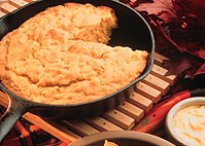
Step one was to make a pan of cornbread, and step two to make a pan of biscuits.  She boiled a couple of eggs, chopped celery and onions, and crumbled the cornbread and biscuits together in a huge bowl.  Then she added the eggs, celery, and onions to the bread mixture, following with poultry seasoning, salt and pepper, and just enough broth to make it all stick together.  She tasted it to make sure the seasonings were at the right level.  Then she spread it in a large pan and baked it in the oven until it was warm through and browned.

While the dressing was browning Mother made giblet gravy.  She had boiled the turkey neck and giblets to make the base for the gravy.  Then she chopped the giblets, adding them back to the broth with what little meat came off the turkey neck.  The gravy also had chopped boiled eggs, poultry seasoning, salt and pepper, and sometimes a little flour to thicken it if I’m remembering right.

For me the turkey was definitely an afterthought.  At Thanksgiving dinner I’d fill my plate with dressing smothered in gravy, sweet potatoes with marshmallows, green bean casserole, fresh cranberry relish, and a small slice of turkey.  Yum!  It’s all about the sides.  The dressing was even more of a treat because Mother was convinced it would go bad quickly, so we only got to have leftovers of it the next day.

Occasionally Mother would make a smaller batch of dressing to go with a roasted chicken.  It was a lot of trouble because of the initial baking involved before construction of the dressing began, but it sure was good!

Holiday Prelude: Not Always Jolly

This time of year I miss my father even more than usual.  As we get closer to Christmas, I think of how it was always a difficult time for him.  He became very quiet and sad, depressed I guess we would say now.  His mother died in December, and he missed her as we got closer to Christmas.

I remember Mother saying to him, “You have to pick yourself up and do this for HER.  I won’t let you ruin HER Christmas.”  It took me a while to figure out that HER was me.

Daddy, to his credit, managed to pull himself together each year.  Mother and Daddy would argue about when to get the tree–he always wanted to wait until Christmas Eve, convinced it was a fire hazard, and Mother wanted it earlier so we could enjoy it.

I felt his cloud of depression beforehand, but we would go out into the fields and pick out a cedar tree to cut down for our Christmas tree.  Mother exhorted us to get one that didn’t have a fork in the top (a common flaw of cedar trees).  Daddy would cut it down, and we dragged it home, put it in a bucket of water in the garage or back yard, and let it soak up some water before taking it inside.

Nothing smells better than a fresh cut cedar tree.  the scent is sweeter and stronger than a pine tree.  And of course the trees we have now, cut in October in Michigan or Canada, coated in fireproofing spray and fake green, have no real smell to speak of.  A cedar tree smells like a wooden cedar chest, only green and alive.

Once we started decorating Daddy started to cheer up a bit.  I still have some of the strings of old lights we used, and the battered glass balls.  He did his Christmas shopping on Christmas Eve–old southern tradition, because you didn’t have the money to shop until then (unless you were doing layaway at Montgomery Wards).

These days I have a fake tree, since I’m usually away at my sister’s house for a few days, and I don’t like to leave a live one to get dry.  But I usually get a live green wreath or table arrangement.  I need that smell of fresh greens to make the holidays real.

Holiday Cooking Disasters, or Almost

I’m always nervous when it’s time to cook a big holiday meal, or even to contribute toward a group effort at one.  I spent many years not cooking for big events, and I still happily go to my sister’s house or a friend’s house for Thanksgiving, Christmas, Easter or any other big foodie holiday.

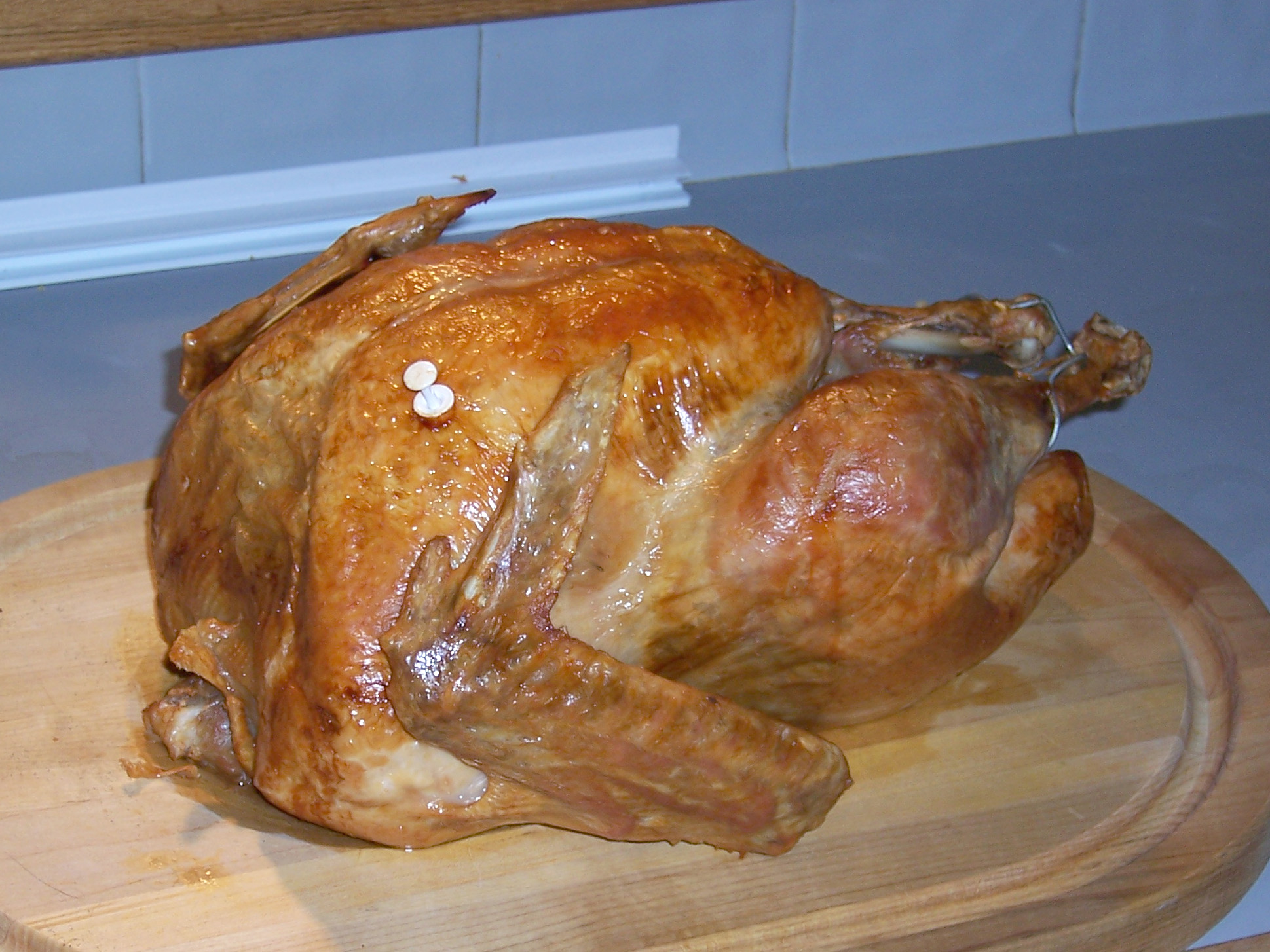
I have finally learned to cook that turkey and bake that ham.  But I’m scarred by previous experiences.  The first time I roasted a turkey, for a Christmas party some years ago, I used a cooking bag (highly recommended).  I did not stuff it, because my family believes in dressing, baked outside the turkey, instead of stuffing, baked inside the turkey, so that’s what I do.  The turkey came out beautifully golden brown, with a moist breast and nicely done drumsticks.  Then I went to carve it, and found the plastic bag in the cavity with the giblets and neck in it.  Woops!  I didn’t say a word, just carved away.

Hams are capable of error as well, even pre-cooked ones that you just have to warm in the oven for a few hours.  I discovered that when I baked a ham–years ago, I swear–for the residents’ dinner at my local YMCA.  I had peeled off the layer of thin cellophane or plastic the meat packer encases the ham with before I put it in the oven.  How was I to know there was a second coat, a red one to match the skin?  Fortunately I figured this out when the ham began to get warm and emit an unusual odor.

Then there was the year I dropped a giant pot of sweet potatoes (already sweetened and spiced, of course) in the sink.  That one broke my heart.  All that work down the drain!  And I burned my hand, which is what made me drop it in the first place.

Fortunately, making mistakes is a great, if painful, way to learn.  I can bake a lovely ham now, or roast a fine turkey.  Holidays are safe at my house, I promise.  And thank goodness someone else is cooking this year!


In My Dreams

Whenever I am especially worried, lonely or agitated, my father appears in my dreams.  This seems strange to me because he died when I was only 22 years old.  But he is still a powerful figure, and someone I look to for comfort or help.

Last night I had an odd dream about measurement.  I was being assessed by someone unknown, and I could see the computer monitor, and charts and graphs that were being generated as I answered questions.  Then Daddy appeared and the computer went away.

Why do our parents matter so much?  Is it that they form us when we are tiny lumps of potential?  Is it the genes that flow among us?  It’s hard to say.  Freudians would say the mother and father shape us beyond hope or repair.  I like to think we’re “Born That Way,” as Lady Gaga says, and nurture can influence nature but can’t change it.  No one really knows at this point.

Whatever the reason, my parents continue to haunt my dreams and shape my responses.  The other day I talked to my sister Glenda.  It was a lovely day, both here and at her home in Ohio, and Glenda said, “It’s a blue October sky, like Mother used to say.”  I remembered her saying that.  No doubt Glenda’s children and grandchildren observe the blue October sky, not knowing where the expression came from.

The depth of memory, feeling and compassion in the river of life is beyond measure.  Sometimes it upsets me when my parents visit me; other times it’s a comfort.  At any rate, I can’t and won’t forget.  Memory never dies.

Northern Depression

Northern Lights Over Greenland, from Flickr
Last year and early this year I took a deep dive into Scandinavian murder mysteries (translated into English, of course), sometimes called “Nordic noir.”  I read the Stieg Larrson trilogy (“The Girl With a Dragon Tattoo,” etc.), all but the latest Henning Mankell novels, and Hakan Nesser’s Inspector Van Veeteren books.

All of them share a bleak climate–not one was set on the beach in Denmark in the summertime, for example.  It is always winter, or spitting freezing rain in what passes for spring or autumn.  They are deeply cynical about politics and the motivations of the police.  Most of them are extremely well-plotted.  Sex varies from plenty and violent/kinky (Larrson) to nonexistent (Nesser).  The characters and stories are compelling.  But I started feeling the winter inside me.

I took a slight detour to Edinburgh, Scotland, with Ian Rankin’s Inspector Rebus mysteries.  Again, it’s never a sunny day, it’s almost always cold, everyone is corrupt.  Rebus is a barely-under-control alcoholic.  I finally burned out and began re-reading Robert B. Parker and Donna Leon.  It rains in Boston and Venice, quite a lot in fact, but somehow those stories do not depress me like the ones set further north do.

Julia Keller, cultural critic at the Chicago Tribune, wrote about Nordic noir, “The ground beneath your feet dramatically affects your worldview.”  Does a cold climate lead to cold temperaments?  That’s the stereotypical view.  Hot-blooded Latins and cold-blooded Swedes–but love, hate, families, money, envy and intrigue exist everywhere, probably even in the last remaining tribe that has never seen TV.

I’ve decided it’s not the weather that makes these novels so depressing, even though they are beautifully written.  In most cases, the detective (or main character, as in the case of Lisbeth Salander) is estranged from his or her family or has none, has no real friends, is alienated from any sense of community.  The only driving force in his life is sticking with the code of the law (the various inspectors), seeking justice, or revenge (Salander).

Nordic noir is a great place to visit, but I don’t want to live there.  Donna Leon’s Brunetti is deeply cynical about Italian politics and the police force.  It often rains (or floods) in her books.  But Brunetti comes home to his professor wife, a quirky, warm family and a delicious home-cooked meal every night.  That’s a world I’d rather inhabit.

Halloweenie

1920's Halloween PostcardA Connecticut lawmaker wants to move the day Halloween is observed, so it always falls on a Saturday:  http://www.nbcconnecticut.com/news/local/Lawmaker-Wants-to-Move-Halloween-to-a-Saturday-132466008.html

I feel compelled to speak up for my Wiccan friends.  OK, I don’t have any Wiccan friends, but Halloween used to be a religious holiday–Samhain, in the old Celtic religion.  Its original name in Christianity was All Hallows Eve, when evil spirits roamed about before being vanquished on All Saints Day.

Now it’s mostly the occasion for parties on or around the day, and closely controlled trick-or-treating.  It’s a time for innocent (or not so innocent) fun.  Still, Halloween should not  become the only weekend-mandated holiday.  That establishes a really bad precedent.  Do you want St. Patrick’s Day to become a Saturday-only holiday?  How about the Fourth of July?

Stand up, citizens of Connecticut, and quash this idea before it spreads!  And a Happy Halloween to all!

Just to celebrate, here’s one of my favorite Halloween movie clips:  “Most Horrible” from Meet Me in St. Louis.  Enjoy!  http://www.youtube.com/watch?v=l3NFOMHDFzg


High-Hat and Other Expressions

My family has been in Tennessee since shortly after the Revolutionary War, when one of the Bowers ancestors got a land grant.  That branch of the family came from England long before that.  Sometimes I have wondered if some of the characteristic expressions that Mother, Daddy and various of my aunts and uncles used go back that far.

Most of them were vivid, descriptive and not anything my friends from other places (like Pennsylvania, for example) had ever heard.  Mother used to complain that someone “high-hatted” her, which meant to act in a snobbish or condescending fashion, i.e., this person thought she was better than Mother.  There was no greater offense to Mother than to be looked down upon!  It looks like the term is derived from a “high hat” like a beaver or a topper which a snobbish person might wear.

Another one was to “be on your high horse.”  This means “to be disdainful or conceited,”  according to the American Heritage Dictionary.  Used in a sentence:  “Don’t you get on your high horse with me, young lady” (usually addressed to me).  This expression goes back to late Middle English, according to the online dictionary!  1375 – 1425, to be precise.  Who’d a thought?

My favorite, however, is “poor dog wouldn’t wag his own tail.”    This one is complicated.  It means, someone who is boastful or bragging, or it can mean someone who is too proud to speak of their own accomplishments.  The irony and understatement make me laugh.  When I looked it up, there’s another expression I had never heard:  “It’s a sorry dog that won’t wag his own tail.”  Apparently this one is from Georgia, and means self-promotion is ok.  The quote was from a judge in Atlanta.

Finally, the best one from Uncle Floyd, who was a font of old sayings:  “Drunker than Cootie’s goose.”  “Drunk” means dizzy or giddy in this old saying.  But who on earth was Cootie, and why did he have a goose?  This may be derived from “Drunker than Cooter Brown,” who apparently decided to stay drunk for the duration of the Civil War (not a bad strategy in my opinion). http://en.wikipedia.org/wiki/Cooter_Brown

Anybody else have a strange or funny saying from your family?

It’s Not OK to Be Old

Lately I’ve been observing the TV commercials that are running now for enrollment in Medicare Advantage Plans, as well as various pharmaceutical ads than run around the nightly network news (only watched by dinosaurs, presumably).  I’ve only seen a few brave advertisers who dare to show real people in their late 60’s or 70’s.  Most of them are like that United Healthcare commercial, where the handsome white-haired guy teaches his granddaughter how to play “Born to Be Wild.”  “You’re more rock and roll than rocking chair,” it says.

I have some respect for this viewpoint, since aging has changed enormously with the advent of the baby boomers.  However, I’m really tired of the premise that aging is just another phase of life, and you’ll be hot/handsome/Viagra loaded until the day you die.

Let’s face it, aging stinks.  Even the relatively minor problems I’ve faced so far remind me that I’d rather be 30 than 50.  But, you know what?  We don’t have a choice.  We either get older or we die.  I’ve never been one to die young and leave a beautiful corpse.  I intend to die old, beating young’uns with my cane if they offend me.

What bothers me is this pretense that we can stave it off with facelifts, healthy living, etc.  Granted, healthy living can make a huge difference.  But it can’t turn back the clock.  It just keeps ticking, no matter what we do.  I read an article in More magazine about women being shocked that they couldn’t get pregnant after age 40.  Hello?  Any legitimate fertility website will tell you the truth about that.  And no credit to Hollywood stars who lie about how they had their babies.  JLo, I’m talking to you.

Forgive the rant, please, gentle readers.  I just wish we could all age gracefully, be accepted as valuable and cherished members of society, make a living wage, and enjoy the life we have, while we have it.  That’s all.  Peace out.

Small Comforts, Part 2

Agatha Christie Plaque at Torre Abbey
Lately I’ve been burying myself in murder mysteries, and I’ve started to wonder why they are so appealing.  I don’t like police procedurals unless they are set in a place I find interesting, like Ian Rankin’s novels in Edinburgh, or some of the older P.D. James’ novels (although hers are much more than police procedurals).  I couldn’t put down the Stieg Larsson trilogy (“The Girl Who”) but have to admit I found it violent and overtly political.  I liked it at the time but won’t read it again.

I like a good “cozy,” but it needs to be either one of the British classics (Agatha Christie, Ngaio Marsh, Margery Allingham, the immortal Dorothy Sayers), Rex Stout or a well-plotted and character-driven recent addition.  I’m especially fond of Donna Leon’s series set in Venice, and the attention her Guido Brunetti pays to meals and to his former-radical wife.  There are a lot of bad mystery novels out there–anything involving a recipe, a quaint/creepy nonexistent village or someone with a peculiar name is instantly suspect to me.

The big question is, why are mystery novels a satisfying small comfort?  What do they do that romance novels, for example, do not?  What need do they fill?  I think mystery novels work for those of us who love them because they create a small world, people it with characters you can believe in,  ask a question (who killed Roger Ackroyd?) and answer it in a logical and emotionally satisfying way.  In most cases, the guilty are punished and the innocent released.

Some mystery novelists are able to make readers comfortable even when good does not prevail.  Donna Leon’s novels have an extra twist; sometimes the evil are not punished due to the depravities of the Italian government and its corruption.  The “Aurelio Zen” novels feature this as well.

Why is mystery more rewarding than romance?  I’m not sure if it’s because some of us need logic, and others just don’t believe in Prince Charming any more.  Maybe it’s just the pleasure of being lost in a complete, well-formed world with characters you care about, and mortal results.  Maybe it’s that these books have order, in a world of disorder.  What do you think?

Faster Than Sound: The Concorde

Photo by Henry Salome
A few months ago I made a list of things I’ve done that I never thought I would do.  No, I haven’t robbed a bank or sailed solo around the world.  Some of them were things I never wanted to do, however, like choosing the flowers for my boyfriend’s coffin.  Others were adventures that never crossed my mind as a child in Tennessee, like going to Australia and New Zealand.  My dreams were pretty small, really.  One big adventure (among many) that I was pushed into by that same boyfriend was flying in a Concorde.

I had gotten sick when traveling in Guatemala and Jamaica on business, and was ill for several weeks after I got home.  Somehow this translated into panic and a fear of flying, which I’d never suffered from before.  Ron was panic-stricken at the thought that I didn’t want to travel.  Travel was life’s blood to him.  He was happiest when setting off to somewhere he hadn’t been before, preferably with a luxury hotel in an exotic setting at the other end, or at least Paris, his favorite city.  He often traveled without me on business, but was insistent that I come along as often as time permitted and I could afford it.

He had a trip coming up to France to visit a client and discovered that Air France was running a special:  buy a round trip business class ticket, and the New York-to-Paris leg was on the Concorde.  “You have to do this,” he said.  “We may never get this chance again.  And the client will pay!”  I was scared, but I agreed.

The plane was actually kind of claustrophobic.  It was narrow and the ceiling was low.  I took deep breaths and drank some wine.  Then the plane took off, and I felt–nothing.  You literally could not feel the acceleration.  After that, it was like being in a very luxurious subway car, only much smoother.  Then after a while I noticed the speed indicator; we were approaching Mach 2.  And I looked out the window.  I could see the curve of the Earth.  Wow!

I still felt a bit scared and shaky, but after that flight I didn’t panic again.  It really was magical.  The Concorde made absolutely no economic sense for the airlines, and I understand why the supersonic plane no longer flies.  But it’s a little bit of magic that’s gone from the world.