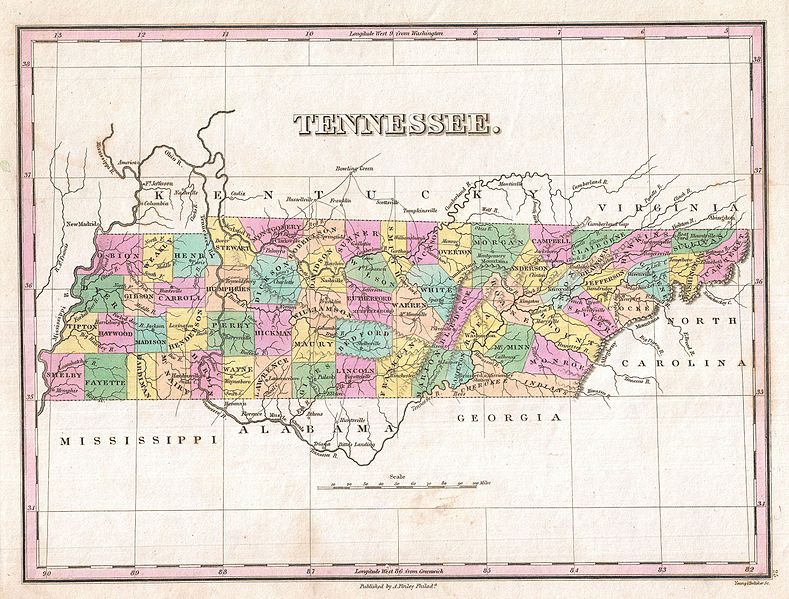
When I was a child we waited in anticipation every fall for sorghum molasses to come on the market. Mother and Daddy were convinced the only appropriate sorghum molasses came from Benton County, Tennessee. Even then, one had to read the label closely to make sure corn syrup had not been added.
Sorghum is a grain. To make molasses, the canes are ground in a mill and the juice runs out. In the old days, a mule walked around and around in a circle to make the mill turn. The juice is cooked, not unlike maple syrup, and the byproducts skimmed off the top. Sorghum-making is a skilled craft. The byproducts used to be put in cattle feed.
But we wanted sorghum for two purposes: Daddy ate it with hot biscuits and butter, and I made gingerbread. How to explain how sorghum tastes? It’s lighter and wilder than the only acceptable substitute, Brer Rabbit Molasses. Dark Karo syrup is your syrup of last resort, too sweet, and it doesn’t have that wildflower/grain taste that sorghum does. But these are dark times we’re living in, so we do the best we can.
Here is Mother’s gingerbread recipe with sorghum molasses. Substitute as you must….
Ginger Bread
1 cup sorghum molasses
4 tablespoons shortening (butter or Crisco)
1 cup buttermilk
Mix together the above.
Sift together dry ingredients:
2 1/2 cups flour
2 teaspoons ginger (the dry powder, for you foodies who peel the root)
1/4 teaspoon salt
1 3/4 teaspoons baking soda
Mix dry and wet ingredients together. Bake at 350 degrees for 20 to 30 minutes.
This spring is a bit out of control, too early, too much, too warm too soon. The last few days we’ve had a cooler spell here in New York, which reminded me of the “winters” Mother taught me about.
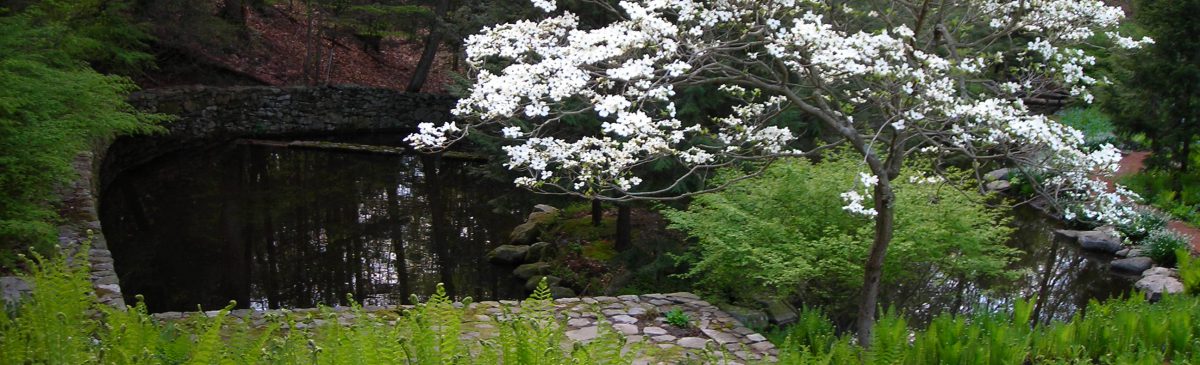
Spring in Tennessee normally comes in an orderly, predictable fashion. Usually it starts in February with the forsythia and crocuses blooming. By March spring is well under way, with gradually warmer periods interspersed with cool spells. The redbuds bloom, then the dogwoods. Finally, in April the blackberry bushes flower.
Cool spells tend to come right when these bloom, and apparently this was always so. Mother and my aunts and uncles all referred to “redbud winter,” “dogwood winter,” and “blackberry winter” as if these were known dates on the calendar. I suppose to a farming community they nearly were.
I guess this is dogwood winter we’re having now in New York, if such a thing exists up here. Everything is out of sync this year. The Bradford pears (stinky, showy things) burst into bloom two weeks ago, along with the Japanese magnolias, which were nipped by the cold and have turned brown. Yet the dogwoods have not bloomed. So I hope they were spared the cold and will open soon.
Sometimes I feel very far from the farm. I’m glad to be working with my brain instead of my back, and God help anyone who had to depend on me to raise food! But I miss the patterns of planting, cultivating, and harvesting. There’s no seasonality to working on a computer. But even here spring intrudes, bursting out along the parkways, in yards, in the scattering of woods. It’s time to think about planting. It’s time to grow.
When I was working for a nonprofit organization in New York City our diversity task
force brought in a consultant to do sensitivity exercises. The consultant had us all stand in a line. First she called out statements that, if they applied to you, you were to take a step back: Person of color, ancestors came through Ellis Island, parents didn’t go to college, parents spoke a language other than English. Then she made statements that required you to step forward. Most of these I don’t remember; one had to do with having a graduate degree. I just remember that the Chief Operating Officer and I ended up by the window, while most of the rest were huddled in the back of the room. I had never viewed myself as privileged before.
I come from a very large family which none of us knew much about until recently. Mother and Daddy both were born and raised in a small farming community in Montgomery County, Tennessee. Daddy was a Jones, Mother was a Bowers. My cousins on the Jones side liked to joke that it was a wonder we weren’t all idiots, since there were Joneses and Bowerses on both sides of our family trees. My parents went through the Great Depression, and told me that sometimes they had nothing but biscuits and sawmill gravy to eat. Neither graduated from high school.
Mostly my relatives were tenant farmers or blue-collar workers. No one had gone to college before my generation. To me it was a point of pride that we had apparently been in Montgomery County forever without making much of a mark on it. We didn’t have any
glorious Civil War history to recount and apparently were too poor to own slaves.
I thought of myself as an educated, liberal person over the years, having no heritage of slavery, lynching or Jim Crow atrocities to live down. I also thought I came from a humble
background and, along with my sisters and brother, had managed to pull myself
up into the middle class. Meanwhile, my cousins Bobby Bowers and Greg Jones had been digging into the genealogy of the Bowers family. In December 2006 they printed “The Descendants of Nathaniel Bowers, Rev., and Hannah Smith.” My sister Sherrie sent me a copy, and I began picking my way through 12 generations of Bowerses.
Turns out my parents were distant enough as cousins to escape any incest jokes. However, most of my other assumptions were not particularly true. There had been land, and perhaps education. Nathaniel Bowers was a preacher and was born in Connecticut (date unknown). His wife was born in 1683. His grandson James fought in the Revolutionary War (with the rank of Capt.) and received a pension, moving to Montgomery County from New Jersey around 1820. James owned 400 acres of land—a war land grant?
During the Civil War, Corporal John Claiborne Bowers was sent home with malaria the
day before the surrender of Fort Donelson to the Union army, so he avoided
going to prison camp with the rest of the Confederate soldiers. Yet he had been there, so he may have fought. Family lore said he was paid to fight by a more affluent neighbor, which was common at the time. His widow received a Confederate Army pension.
The genealogy book noted births, deaths, pensions, deeds, census data, and even a
newspaper account of an apparent multiple murder including the husband of one
of the Bowerses in 1878. The question of slave ownership was never raised. Nothing
explained how the land had gone away.
I emailed Cousin Bobby about it, and he said he didn’t look into slave ownership. But what he did find out changed my view of our family history forever. Education, property, Revolutionary and Civil War veterans—not what I thought I knew. And still a lot of
buried history.
The white clapboard church is barely set back from the asphalt road, an old cemetery on one side, the raw red brick parsonage on the other. The church is small and spare, with only a steeple for adornment.
My car pulls into the small parking lot, spitting gravel and dust as it halts. There are battered pickup trucks, washed and polished sedans, a couple of jacked-up muscle cars. It is already hot, although it is not yet 11 in the morning. The air is thick with humidity, a dense wall almost too thick to breathe.
The men stand outside by the front porch, smoking and talking. Their faces are sun-reddened. They wear short-sleeved shirts and ties, and have removed their dark suit jackets in the heat. They will put them on to go in the church, then take them off again and fold them carefully before the sermon starts.
I go up the worn concrete steps into the vestibule, suddenly dark and a little cooler, and emerge into the sanctuary. The old, dark wood floors are muffled with runners of faded red carpet on the aisles. The pews are old, dark wood as well, hard and slippery from generations of churchgoers.
The white walls are bare. There is no cross on the wall or statues in niches. There are only a bare wooden pulpit, a small choir loft, a slightly out-of-tune upright piano, and a communion table—the altar, we call it—with a vase of flowers left over from a funeral, beginning to wilt.
The sanctuary smells of dusty carpet, furniture polish, the wilting flowers, and people beginning to sweat as the room fills. The women’s polyester flowered dresses are bright against their husbands’ Sunday suits. I fan myself with a paper fan on a wooden stick. It is printed with a scene of Jesus in the Garden of Gethsemane. He is kneeling in a white robe and praying, pinned in a beam of white light like a deer in the headlights.
Then the preacher comes in, the choir loft fills with my aunts and uncles and cousins and neighbors, and the service begins. The preacher cannot stir me. I am impervious to his thin, nasal voice; the mistakes in his grammar gall me. His collar is too big. My heart is harder than stone, it oozes contempt like the asphalt road outside oozes tar.
But I am undone all the same. It is the old country hymns, sung by untrained voices. My uncles, my aunts, my cousins, my neighbors sing harmony without effort or thought, singing a melancholy song their parents sang to them. They sing, “O come, angel band, come and around me stand/O bear me away on your snow white wings/ To my immortal home.”
And I am borne away on those wings, out the back door of the church, into the green graveyard. Ancient cedar trees shade the graves; the breeze whispers through the branches. My grandparents are there, and my great-grandparents, and my great-great grandparents. The old, grey stones are worn and crooked. They are simple, no fancy carvings, no weeping Victorian angels. They sink into the mossy graves. There is no room for anyone else. The past owns this place.
I made a fast trip to my home town in Tennessee this weekend because my sisters were all driving there for the cousins’ lunch. Usually my sister Sherrie is the only one who can go, because she lives less than an hour away. For the rest of us, it’s a lengthy drive or, in my case, a two-hour flight. But we all agreed to get together this time and go to the lunch.
The Jones family used to have big reunions in the summertime. We’d cook out and picnic in the local park. I remember my grandfather, Pap, sitting in a lawn chair under a huge shade tree, his back poker-straight. He had rather cold blue eyes and a beak of a nose. Mammy, my grandmother, had passed away by the time I remember the reunions. His ten children would be there with their spouses and children, so it was quite a crowd. My cousin Mary Ann organized reunions later, after Pap died. It got harder and harder to gather the group as some moved away, and others died. Then Mary Ann passed away suddenly from a medical condition and the reunions stopped.
A few years ago the last of Pap’s children started meeting at a restaurant for lunch occasionally along with some of their nieces and nephews, i.e., the cousins. The lunch on Saturday was one of the biggest ever. Aunt Agnes was there, the youngest of Pap’s children–she’s 86. And there were 27 cousins, ranging in age from Lurleen, who is 87(oldest daughter of Pap’s oldest son), to four of Pap’s great-great-grandchildren, three of whom were less than 10 years old.
It was pretty overwhelming, especially when I realized our teenaged waitress was a cousin, too (one of the great-great-grandchildren), and did not remember her great-grandfather, who was one of my dad’s brothers. Whew! And I’m not that old! I guess that’s what happens when you have a large family spread over 20 years, and some of them have large families spread over 20 years, like my parents did.
The world is different now. We are scattered far and wide, and many of us don’t know the other cousins. One of my nephews met a cousin when he and his wife took their first child to the pediatrician. They had the traditional Southern “where are you from? where is your family from?” conversation. Turns out they were both Pap’s great-grandchildren and had never known each other. Now they are friends.



 writinghersense