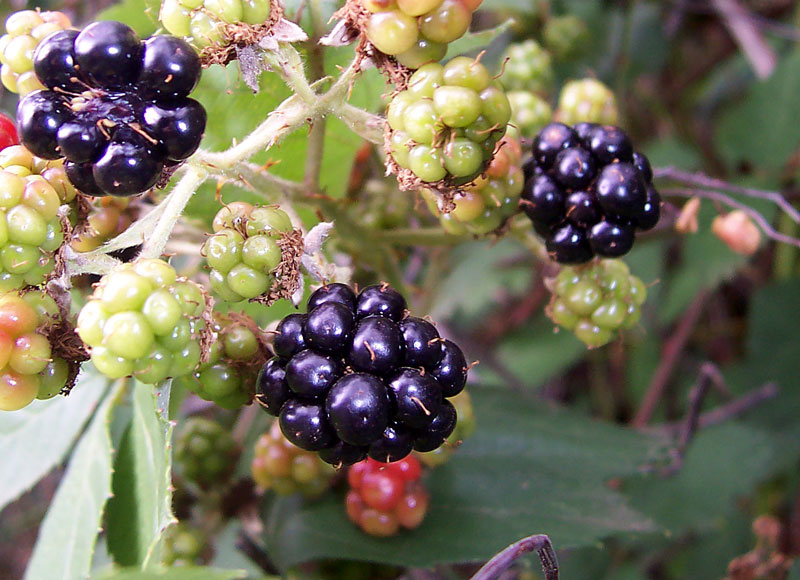
The best blackberries are wild ones, picked in the heat of summer from brambles in a fence row or along the side of an old dirt road. The wild ones just have more flavor than domesticated ones. That squirt of purple juice is richer and sweeter than any strawberry.
Photo by Fir 0002When we lived on the farm Mother and I picked quarts of them every summer. This was an ordeal. Mother always carried a stick in case there were snakes, but the real enemies were chiggers and ticks. We would dress in long sleeves and long pants, socks and shoes, sweating in the heat, in an effort to foil them. The blackberry bushes were full of thorns and stickers to tear at your hands. I always emerged with scars.
After filling up as many plastic buckets as we could carry (if the bushes were full), Mother and I trudged back up the hill to the house. Then the real work began–hunting for the tiny, biting vampires before they got a chance to attach and suck your blood. The ticks were smaller than deer ticks; I could only see them if they were in motion. If I missed one, Mother would light a match, blow it out, and touch it to the tick to make it let go. We checked each other to make sure none got away. That’s the action referred to in Brad Paisley’s immortal song, “Ticks.”
But the end result of all the blood and labor was blackberry cobbler. Here is my mother’s easy cobbler recipe. You can use any fresh or frozen berries, except I don’t recommend strawberries.
Easy Cobbler
Spray bottom of a 9″ x 12″ baking dish (like Pyrex) with Pam or other oil spray.
1 cup flour
1 cup sugar
1/4 tsp. salt
2 tsp. baking powder
3/4 cup milk
1 stick butter or margarine, melted
2 1/2 cups berries, sweetened with 1/2 cup sugar
Mix all dry ingredients in baking dish. Add milk, stir well. Pour melted butter over dough. Place sweetened berries on top. Bake at 350 degrees until top is brown, 45 minutes to 1 hour.
Halcyon days are a time of peace and calmness, when the sky is blue, the ocean is calm, and one feels safe and loved. The expression comes from a story in the Metamorphoses of Ovid, a Greek classic whose theme is transformation.
From mendocino.eduCeyx was the king of Trachis. He and his wife Alcyone, the daughter of Aeolus, god of the winds, were happy together and devoted to each other. But Ceyx became possessed with the desire to visit a distant oracle and get a prediction of the future. Alcyone pleaded with him to stay, but he boarded a ship and set sail. When he was far from home Poseidon called up a mighty storm. Everyone on board drowned, including Ceyx.
Alcyone went to the shore every day to look for his ship returning. Day after day she stood on the beach, filled with terrible forebodings. Finally Aphrodite, goddess of love, sent Ceyx’s ghost to her in a dream and told her to go to the shore. As Alcyone ran into the water toward her husband’s body, Aphrodite transformed them both into sea birds, bringing Ceyx back to life. When the halcyon birds build their nest on the sea, Aeolus calms the winds, and the skies are clear.
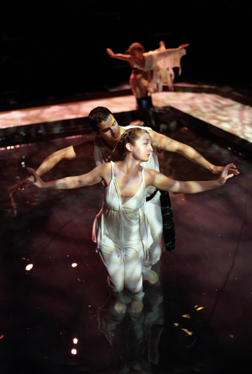
I saw Mary Zimmerman’s production of the Metamorphoses on Broadway in 2002. The actors seemed to turn into birds before my eyes. I’ve never seen a production that moved me more.
I think we all wish for everlasting love, and we all know, even if we find it, we will lose it—to time, illness, death or depravity. The object of even the strongest love will end. But if we are lucky, or the gods intervene, the love itself goes on. And
perhaps there will be halcyon days.
During the summer of 2001, eight of us friends rented a villa outside Panzano, Italy on a working farm. The owners lived in the other wing of the house and grew grapes and olives. They also kept a couple of horses, Oskar and Luna, for riding. Our group enjoyed looking at the rolling hills, watching the horses graze while we sat on the flagstone terrace as the sun set, and talking until late at night under the stars. The villa was our home base for a week while we explored Siena, Florence (Firenze), Montalcino, Montepulciano, and Panzano itself, which had charming restaurants and a renowned shoe-maker. We also cooked a lot of our meals and went through a ridiculous amount of the local wine.
One day half the group went to San Gimignano to see the sights. The rest of us decided to have a lazy day at the villa’s pool. Sally had broken a bone in her foot six weeks before we left for Italy. She had touristed through Rome, Florence and Siena in an orthotic boot, so she thought a day at the pool would be a nice break.
Friends at the Villa, 2001
Sally, Scott, Nancy and I were sitting on the terrace reading and relaxing when we heard a clopping sound. Oskar and Luna were standing in the yard looking at us, and the fence was down. Sally jumped up and caught both horses by their halters, while I tried
to find some rope so we could tie them to a tree or something. There was no rope in any of the outbuildings, so Scott closed the farm’s electric gate to keep them from straying onto the road. The owners were away in Florence for the day. Nancy called them on their mobile phone and reported the problem.
Oskar and Luna were patient with us, but they didn’t stand still, and they had big, heavy
hooves. One of them shifted his weight and stepped on Sally’s broken foot! She
yelled and let him go. The horses drifted to the front yard, and Sally put an ice pack on her foot.
Then a real Italian cowboy arrived, on a motorbike. The owners had called him to come fix the fence and get the horses in. He wasn’t much like John Wayne. He was small and handsome, with a ponytail and a tan, and wore shorts, stylish sunglasses, and hiking boots. He said something like, “Los cavallos escapa,” and we said, “Si, si.”
Turns out the horses had broken their water pipe and were thirsty, so that was why they broke down the fence. Our cowboy fixed the pipe, repaired the fence, put the horses back in their field, and took off on his motorbike, smiling and waving.
I plan to write more about this trip. It was an amazing time, overshadowed by illness in my family at home, but still a fun, peaceful interlude. Then later that year came 9/11, and the world changed.
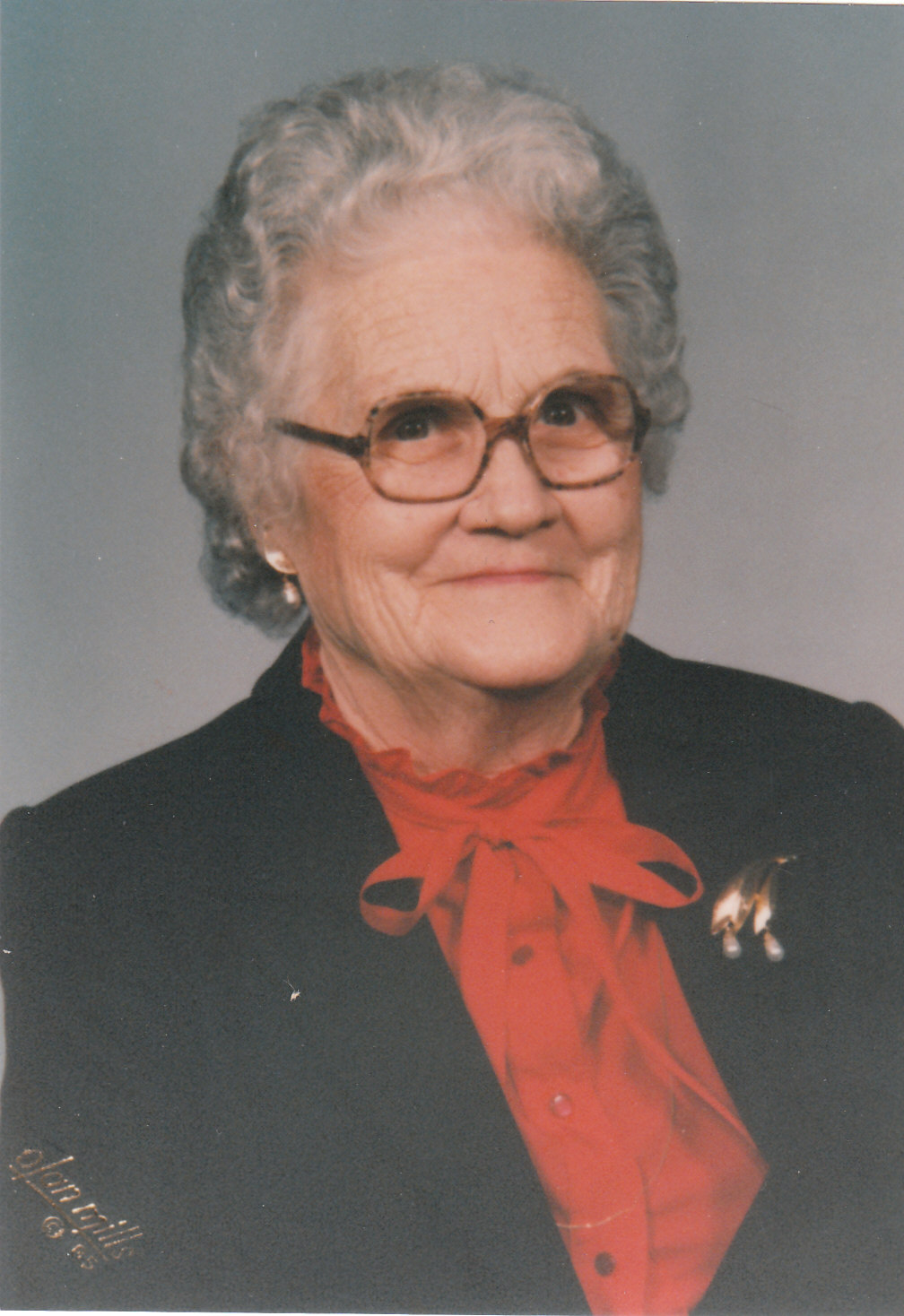
My friend Nancy commented that many of my stories almost seem like they are set in an earlier time–kind of long ago and far away. In many ways she’s right. My parents grew up during the Great Depression, and their lives were formed by hard work and poverty like I never knew. They went from ancient Model Ts and farming with mules to watching a man walk on the moon. Mother lived until 2004 and was almost 87 when she died.
I am the youngest of their five children. So my early life was a mix of homemade biscuits, watching the Grand Ole Opry on TV on Saturday nights, and the Baptist church–and also being bused for school integration, watching riots and wars on TV, and knowing the high school drug dealers. And I spent a lot of time watching TV.
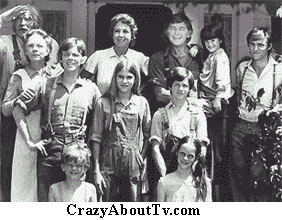
My parents’ lives in their young days were a bit like “The Waltons,” which was set on a farm during the Depression. I loved that show! I felt like a female version of John Boy, only more determined to get off the farm and to a big city.
The WaltonsSome of my classmates were more like “The Dukes of Hazzard.” Ok, I admit, my first car was an aged ’71 Plymouth Duster with a 386 8-cylinder engine, and cheater slicks and cams on the rear end. The first thing Daddy did when I got it home was take off the cheater slicks and cams. He thought it wasn’t proper for a girl. I really never drove like a maniac. I just liked to give the impression that I could. That poor car kept going to nearly 200,000 miles, despite being a terrible gas gulper.
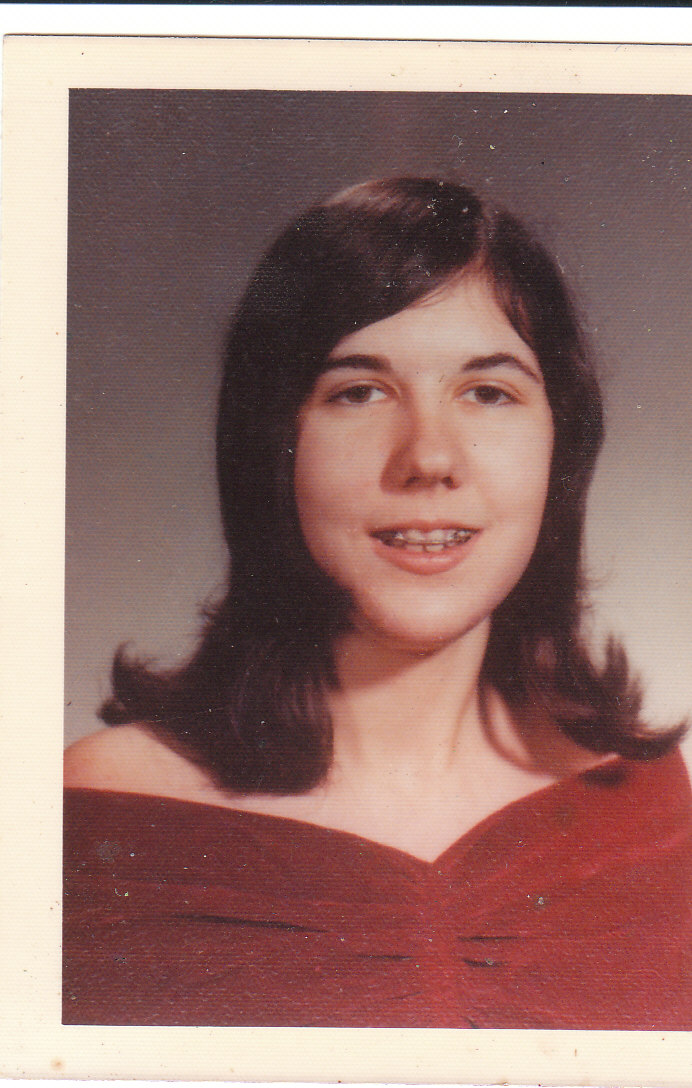
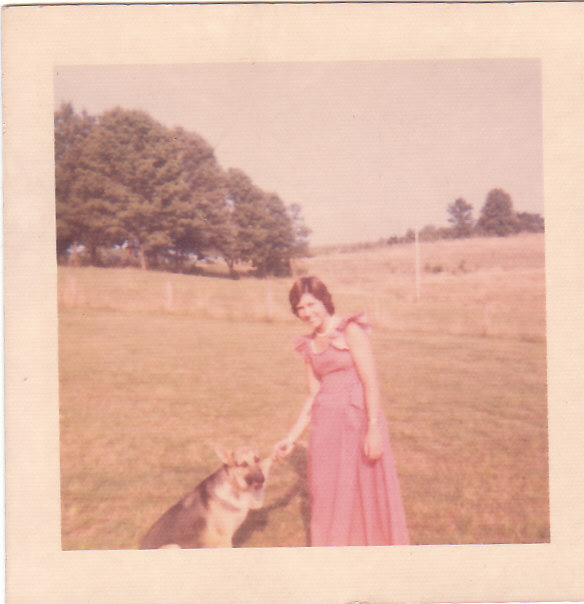
I think my favorite show, however, was “The Mary Tyler Moore Show.” She was determined to make it on her own, and she was beautiful and smart, and trying to learn to be aggressive enough to compete with the guys. And she was so funny! Here’s my high school senior picture.
High School Graduation
Check out the hairstyle. Who does that remind you of? Yes, for those of you who didn’t know me then, I was once a brunette 😉
As time went by, I moved on to watching “Dallas” and “Dynasty,” but I didn’t see myself in them. It took “Murphy Brown” before I identified with a character again.
So, if you had to tell your early life in TV shows, which ones would you choose?
When I was growing up, Mother’s Day was a big event at the First Baptist Church in Clarksville. Brother Laida always preached about Biblical mothers (with not too much emphasis on Mary, mother of Jesus) and sometimes a segue into Ruth and her loyalty to her mother-in-law Naomi.
The most interesting thing to me about the church service, however, was that everyone wore a rose or a carnation to church that day. I asked Mother about it when I was small. “You wear a red rose or carnation if your mother is alive, and a white one if she’s not,” she said. Mother and Daddy each wore a white carnation and I wore a red one, all bought at the grocery store on Saturday. In later years when we lived on the farm I wore a red rose pinned to my dress from the old-fashioned rosebush that spilled over in our front yard.
Mother always talked about her mother on that day with a mix of sadness and detachment that I found hard to understand. I remember her saying I had her mother’s hands, long-fingered and slim.
Mother and I had very different personalities, and my stubbornness irritated her. Life was a constant battle for control, and I almost always gave in. I moved away to gain some freedom, but I never stopped coming home. No matter how we disagreed, I knew she loved me.
Her health deteriorated in her last years, and my sister Glenda moved her to her own town in Ohio and took care of her. Even when she was in her bed in a nursing home, Mother was still herself. Racked by strokes, she could hardly speak. I would visit her, flying in from New York, and talk about nothing while she struggled to respond, But when I went to leave, she managed to say the same things every time. “Did you park at the airport? Will you get home before dark? Be careful,” she said, very slowly. Her dark eyes followed me as I walked out the door of her room.
I miss her still. I wish I had a white rose to wear for her on the day.
I grew up with dogs and cats, generally one dog at a time and, when we moved to the farm, multiple half-wild cats. I loved them all, but Chico was the best dog.
I was in school at the University of Tennessee at Knoxville. Walking down the Strip, a slightly seedy street lined with delis, head shops and bookstores, I saw a man standing on the corner with a box of tiny puppies. “The mother’s a purebred German shepherd, but some mutt got to her, ” he said. “If people don’t take the puppies I’m going to drown them.”
I was stricken. I immediately hatched a desperate plan. I took the only puppy who was marked black and tan like a German shepherd and took him back to my dorm room. He lived in a box under my bed for a few days. I named him Chico, because he was a little boy and because I liked the Marx Brothers. I took him to the vet, who told me he was only 4 weeks old, and gave him vitamins. Then I bummed a ride home for the weekend and took him to my parents’ farm.
Mother was not thrilled when I turned up with a puppy in a shoebox. There was no question of him living in the house–pets were never allowed inside–and the weather was cold. Daddy built a small doghouse from bits of wood and insulated it with styrofoam. He put a light on an industrial extension cord, put the light in a coffee can, and wrapped it in a towel, so Chico had a space heater. He even put an alarm clock in a towel so Chico wouldn’t cry. Then he fenced a tiny yard with loose bricks so Chico couldn’t wander away.
Chico never looked back. He grew into a 110-pound German shepherd, always gentle, loving and patient with all the grandchildren. He was devoted to my parents and never bit a soul. Chico liked to take my wrist in his mouth, shake it, and let it go. I thought nothing of it until I saw him crack a hambone in his jaws. When I brought a boyfriend home he would walk between me and the guy. He didn’t growl. He didn’t need to.
After Daddy died suddenly Chico became Mother’s guard dog and protector. He still roamed the farm and cadged food from the neighbors. When he was 11 years old, feeble and shaky, he had to be put down. I’ve never had a dog since then. I’m pretty much a cat person now. But I’m glad I brought that puppy home.
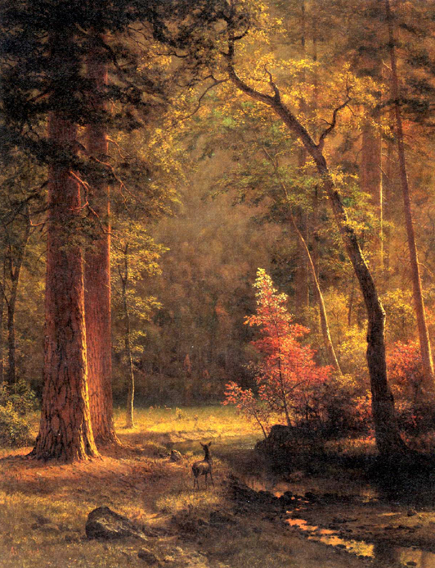
When I think of that time, it’s mainly the heat I remember, and the air so thick. The woods in back of the house were lush and green, but the pasture in front was beginning to turn brown from the August heat. Even as the sun set over the ridge, smoldering red, it didn’t get much cooler. The haze of heat dissolved from the fields, but the air was still with moisture and hard to breathe in.
Then it was dark, and it was darker than it has ever been again. Dark as Egypt, my mother would say. No street lights, no security light, the nearest house a half mile away across the fields and shrouded in trees. Coming down the gravel driveway to the raw, red brick house and turning off the car lights, you saw streaks and spots that weren’t there, like the lights inside your eyelids.
Then you and the boy stumbled across the yard in the dark and sat in the swing under the big oak tree. Slowly you could see again, first the dark bulk of the house, and then the stars. There were more stars then, thick brushstrokes of them across the sky. You could actually see the arm of the Milky Way, distant pinpoints in the dark.
A car would pass on the road, lonely and preoccupied. There was the hum of the air conditioner in the window of the house, the high, monotonous peeping of tree frogs, the quiet whuffling of cows, settled down to sleep by the pasture fence. A bird rustled in the tree above your head, shifting its perch. The swing creaked and its chains jingled when the boy suddenly stopped its motion.
Then the moon rose above the ridge, drowning the stars, silvering the ground fog smoking in the hollow. You could almost count the craters on the moon, it was so bright and unnaturally big. And you were not afraid of anything, not anything.
Suddenly the porch light flicked on and off. The boy decided it was time to go. So you went in the house, resentful, not knowing that nothing would ever be the same again.
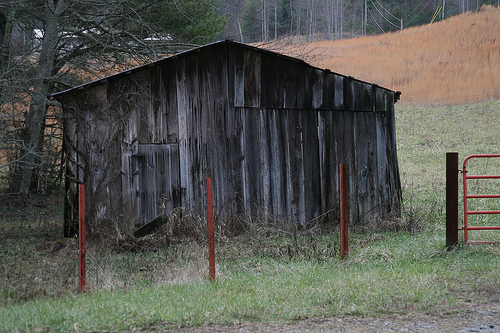
The white clapboard church is barely set back from the asphalt road, an old cemetery on one side, the raw red brick parsonage on the other. The church is small and spare, with only a steeple for adornment.
My car pulls into the small parking lot, spitting gravel and dust as it halts. There are battered pickup trucks, washed and polished sedans, a couple of jacked-up muscle cars. It is already hot, although it is not yet 11 in the morning. The air is thick with humidity, a dense wall almost too thick to breathe.
The men stand outside by the front porch, smoking and talking. Their faces are sun-reddened. They wear short-sleeved shirts and ties, and have removed their dark suit jackets in the heat. They will put them on to go in the church, then take them off again and fold them carefully before the sermon starts.
I go up the worn concrete steps into the vestibule, suddenly dark and a little cooler, and emerge into the sanctuary. The old, dark wood floors are muffled with runners of faded red carpet on the aisles. The pews are old, dark wood as well, hard and slippery from generations of churchgoers.
The white walls are bare. There is no cross on the wall or statues in niches. There are only a bare wooden pulpit, a small choir loft, a slightly out-of-tune upright piano, and a communion table—the altar, we call it—with a vase of flowers left over from a funeral, beginning to wilt.
The sanctuary smells of dusty carpet, furniture polish, the wilting flowers, and people beginning to sweat as the room fills. The women’s polyester flowered dresses are bright against their husbands’ Sunday suits. I fan myself with a paper fan on a wooden stick. It is printed with a scene of Jesus in the Garden of Gethsemane. He is kneeling in a white robe and praying, pinned in a beam of white light like a deer in the headlights.
Then the preacher comes in, the choir loft fills with my aunts and uncles and cousins and neighbors, and the service begins. The preacher cannot stir me. I am impervious to his thin, nasal voice; the mistakes in his grammar gall me. His collar is too big. My heart is harder than stone, it oozes contempt like the asphalt road outside oozes tar.
But I am undone all the same. It is the old country hymns, sung by untrained voices. My uncles, my aunts, my cousins, my neighbors sing harmony without effort or thought, singing a melancholy song their parents sang to them. They sing, “O come, angel band, come and around me stand/O bear me away on your snow white wings/ To my immortal home.”
And I am borne away on those wings, out the back door of the church, into the green graveyard. Ancient cedar trees shade the graves; the breeze whispers through the branches. My grandparents are there, and my great-grandparents, and my great-great grandparents. The old, grey stones are worn and crooked. They are simple, no fancy carvings, no weeping Victorian angels. They sink into the mossy graves. There is no room for anyone else. The past owns this place.
I made a fast trip to my home town in Tennessee this weekend because my sisters were all driving there for the cousins’ lunch. Usually my sister Sherrie is the only one who can go, because she lives less than an hour away. For the rest of us, it’s a lengthy drive or, in my case, a two-hour flight. But we all agreed to get together this time and go to the lunch.
The Jones family used to have big reunions in the summertime. We’d cook out and picnic in the local park. I remember my grandfather, Pap, sitting in a lawn chair under a huge shade tree, his back poker-straight. He had rather cold blue eyes and a beak of a nose. Mammy, my grandmother, had passed away by the time I remember the reunions. His ten children would be there with their spouses and children, so it was quite a crowd. My cousin Mary Ann organized reunions later, after Pap died. It got harder and harder to gather the group as some moved away, and others died. Then Mary Ann passed away suddenly from a medical condition and the reunions stopped.
A few years ago the last of Pap’s children started meeting at a restaurant for lunch occasionally along with some of their nieces and nephews, i.e., the cousins. The lunch on Saturday was one of the biggest ever. Aunt Agnes was there, the youngest of Pap’s children–she’s 86. And there were 27 cousins, ranging in age from Lurleen, who is 87(oldest daughter of Pap’s oldest son), to four of Pap’s great-great-grandchildren, three of whom were less than 10 years old.
It was pretty overwhelming, especially when I realized our teenaged waitress was a cousin, too (one of the great-great-grandchildren), and did not remember her great-grandfather, who was one of my dad’s brothers. Whew! And I’m not that old! I guess that’s what happens when you have a large family spread over 20 years, and some of them have large families spread over 20 years, like my parents did.
The world is different now. We are scattered far and wide, and many of us don’t know the other cousins. One of my nephews met a cousin when he and his wife took their first child to the pediatrician. They had the traditional Southern “where are you from? where is your family from?” conversation. Turns out they were both Pap’s great-grandchildren and had never known each other. Now they are friends.
I have my mother’s recipes. When she had to move to a nursing home some years ago after having a stroke, my sisters and I cleaned out her apartment, and the recipes went home with me. Most of them are not anything you would want to cook now—classic ‘50’s and ‘60’s concoctions she’d torn out of women’s magazines, full of Campbell’s soup or condensed milk, or even, God forbid, that syrupy Eagle Brand stuff. But the notecards have the recipes I remember as a child, growing up in Tennessee.
Some of them are so terse they are unintelligible. I called Mother at the nursing home and asked her about Mama’s Tea Cakes. (Mama was Mother’s mother.) It calls for “flour,” no amount specified. “What do you mean, ‘flour’?” I asked her. “How much? Two cups?” She said slowly, “Enough flour. You’ll know when you see it.” True enough for someone who made biscuits from scratch all the time, but not for me. I finally figured out how much by the texture, when the dough was just dry enough and not too dry. I wrote down the amount for future use.
The chocolate pie recipe became a matter of contention after Mother died in 2004. For some reason I took a notion to bake it for the first time in years. There were two versions, and neither was complete—oven temperature? How long do you bake it? None of my sisters remembered, and they had variant versions from our aunt Elsie. Finally, after comparing with a hokey hillbilly cookbook from a Cracker Barrel store, I think I got the definitive recipe.
Mother’s Southern Baptist Sunday School class cookbook was a great source of recipes as well. I have their recommendation on how to cook perfect fried chicken every time. I’ve had to adapt the cooking time, because chickens now are bred to have bloated breasts and take longer to cook.
When I was growing up, everything was fried, even the vegetables, unless they were “cooked down” with a piece of fat meat. Dessert was a part of every meal, sometimes just biscuits with butter and jam or sorghum molasses, but always there. Mother cooked three meals a day, every day, and cooked for whoever was home, including the workers getting in the tobacco in the fall, as many as 10 or 12 people.
My family has a terrible history of heart disease and high blood pressure. All of us try to cook healthy things now, which pretty much kills everything I grew up with. But every once in a while I throw caution to the wind and make that chocolate pie, or a Baptist pound cake, which requires a pound of butter and six eggs, or even fry some chicken. It makes my tiny condo kitchen smell like home.





 writinghersense