Something a Bit Different: A Villanelle

I was a bit stumped for a subject today.  Then I started feeling a bit melancholy about how quickly spring was passing–I can feel melancholy about almost anything, which is one of my great failings.  Anyway, I remembered this poem I wrote a few years ago because I wanted to try a villanelle.   Here is the Wikipedia definition:  A villanelle has only two rhyme sounds. The first and third lines of the first stanza are rhyming refrains that alternate as the third line in each successive stanza and form a couplet at the close. A villanelle is nineteen lines long, consisting of five tercets and one concluding quatrain.

I wrote it just to see if I could.  Villanelles are not supposed to tell a story–they are more of a verbal dance.  So here it is.

Spring Song

You are gone, but spring has come at last

As it does every year, without remorse,

Smiling harbinger of everything that’s passed.


Fields of yellow flowers, the fierce green of grass,

The sullen river swelling in its course—

You are gone, but spring has come at last.


The black hole in my chest was once so vast

A cavity, it sucked in all light with its force.

Smiling harbinger—of everything that’s passed


Spring sings, in the mockingbird’s pastiche.  Fast

And faster, notes pour from the source.

You are gone.  But spring has come at last,


Though I would stop it, break the iron cast

Of seasons always changing.  There’s no recourse,

Smiling harbinger.  Of everything that’s passed


I cannot be forgiving.  Life’s too fast

Or, then again, too slow to stay, of course.

You are gone, but spring has come at last,

Searing me with everything that’s passed.

Easter Baskets and Orchids

Ours were not this pretty!
I wonder how many kitchen counters are smudged with Paas Easter egg dye today.  My great-niece and I used to dye them in my sister’s kitchen, covering every surface we could find with newspapers, and we still wound up with dye on our hands, our clothes and most counters.  The kits got fancier as the years went by.  No more cheesy transfers of rabbits and ducks!  The last time Courtney and I dyed them, we had glitter and a sort of tie-dye effect.

When I was small Mother was really into Easter.  I always got an Easter basket with a hollow chocolate rabbit, some jelly beans, and a stuffed animal.  I was a great collector of stuffed animals and was thrilled to get a really lifelike brown rabbit one year.  I petted him as if he were real.

We always went to church.  This involved a new Easter dress, shiny patent leather Mary Janes, and a hat and gloves.  Mother was encased in a dress and hat (and of course her girdle), stockings and heels, and gloves.  Daddy bought us each a corsage to wear.  In good years the corsage was an orchid.  I endured church by concentrating on Easter dinner, which awaited us at home.

Mother usually baked a ham and made candied sweet potatoes and green beans.  These had to be heated when we returned home.  Sometimes we had rolls from the grocery store, which I considered a great treat.

Usually dessert was coconut pie, although one year when we were on the farm Mother made a special, multi-layer coconut cake with little nests of green-dyed coconut holding jelly beans.  The layers were graduated like a traditional wedding cake.  Unfortunately they crumbled at the edges–maybe the recipe was a little too moist?  At any rate, the cake turned into a coconut mountain with nests perilously clinging to its sides.

Maybe it was the return of spring which made Easter so special to her.  Mother tried recipes out of Good Housekeeping which involved cutting cake layers into rabbit body parts.  And we both religiously dyed eggs, even when I came home from college.  We ended up throwing them away because they weren’t safe to eat after sitting out for a couple of days.  But it was worth it to have a bowl full of jewel-toned works of “art” on the table to celebrate resurrection and spring.

Dogwood Winter

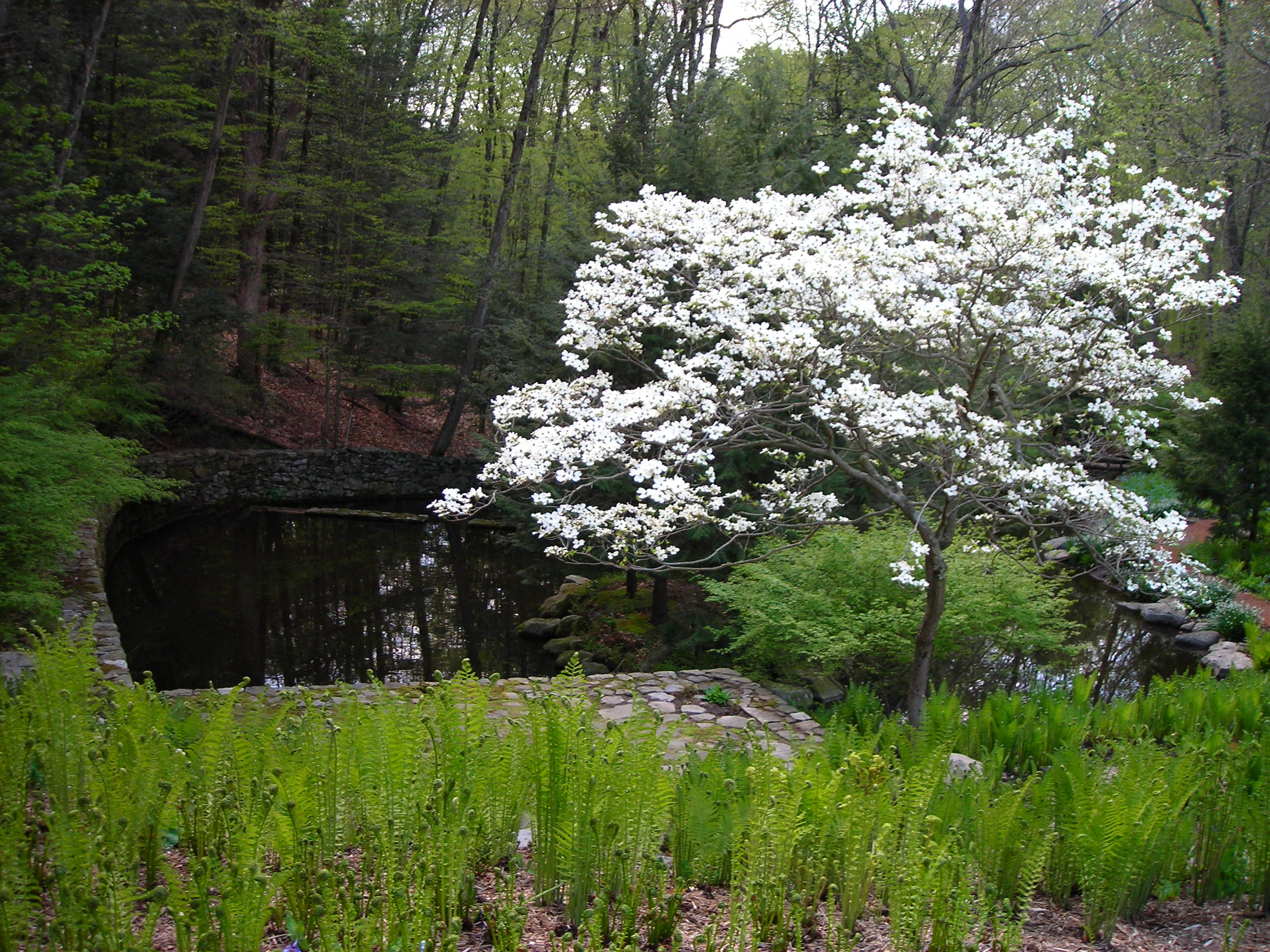
This spring is a bit out of control, too early, too much, too warm too soon. The last few days we’ve had a cooler spell here in New York, which reminded me of the “winters” Mother taught me about.

Spring in Tennessee normally comes in an orderly, predictable fashion. Usually it starts in February with the forsythia and crocuses blooming. By March spring is well under way, with gradually warmer periods interspersed with cool spells. The redbuds bloom, then the dogwoods. Finally, in April the blackberry bushes flower.

Cool spells tend to come right when these bloom, and apparently this was always so. Mother and my aunts and uncles all referred to “redbud winter,” “dogwood winter,” and “blackberry winter” as if these were known dates on the calendar. I suppose to a farming community they nearly were.

I guess this is dogwood winter we’re having now in New York, if such a thing exists up here. Everything is out of sync this year. The Bradford pears (stinky, showy things) burst into bloom two weeks ago, along with the Japanese magnolias, which were nipped by the cold and have turned brown. Yet the dogwoods have not bloomed. So I hope they were spared the cold and will open soon.

Sometimes I feel very far from the farm. I’m glad to be working with my brain instead of my back, and God help anyone who had to depend on me to raise food! But I miss the patterns of planting, cultivating, and harvesting. There’s no seasonality to working on a computer. But even here spring intrudes, bursting out along the parkways, in yards, in the scattering of woods.  It’s time to think about planting.  It’s time to grow.

Somebody’s Princess

While I was getting my nails done today (big, once-a-month treat) a young woman came in with her daughter.  The little girl was wearing a special dress with a velvet sleeveless top and a longish skirt of lace and pink taffeta (“Target,” her mom said when I asked), and her hair was pulled up in a ballerina’s bun on top of her head.  “It’s her birthday today, so she would like her nails polished, please,” her mom said.  The Korean nail ladies made a fuss over her and asked how old she was.  “Six, today,” she said.

For some reason this made me remember being taken to the beauty salon in Clarksville by my sister Juanita.  I don’t remember if I had been before, but I was entranced by the whole experience.  The beautician trimmed my bangs while Juanita was getting a proper ’60s haircut and styling–no blow dryers back then!  Rollers and pin curls and those dryers with big metal bonnets were the norm, and the smells were strong with perfume.

I had been admitted to a world where you were pampered and made beautiful.  And I had no doubt at all that I was beautiful!  The finishing touch was a hairpin with a large fake diamond, which the beautician used to help keep the stray hairs from my ponytail in place.  I was thrilled.

I still feel pampered and treated when I go to the salon now.  I’m no longer convinced I’m beautiful, alas.  The face in the mirror doesn’t look like it did.  But it’s still nice to come out looking better than when you went in, and to feel taken care of for an hour or two.  I hope all little girls get the chance to feel special that way, at some point before the pains of growing up set in.

The Easter Fair in Prague

Czech Easter eggs, from Wikimedia
The last time I took a vacation out of the U.S. was in 2002.  At a fundraising auction for the Y I belong to, I won two round-trip tickets to anywhere British Airways flew.  The hitch was, you had to connect through London.  I considered South Africa, but didn’t really have enough vacation time to make such a long trip worthwhile.  And I wanted to go somewhere I hadn’t been before.  So after much consultation and research, I went to Prague in March 2002 with my friend Dana.

The tourist season had not yet begun.  It was still cold, very grey and rainy.  The castles in the countryside around Prague had not opened for the season, and some of the tourist attractions in the city were closed.  But it was still lovely.  There were free concerts every day in churches and concert halls.  The beer halls were lots of fun–we quickly learned how to order in Czech, and there were any number of Americans there as well.  The streets were dark and medieval, but the people were friendly and spoke a little English.

We shopped for garnet jewelry, which is a specialty of the Czech Republic, and dined in snug, Art Deco restaurants.  We walked the rain-slick streets and went through the remains of the old Jewish quarter.  After the horror of the Holocaust, there are almost no Jews in Prague to this day.

One day we went to the Easter fair, which was set up in small booths in the main square.  Most of the booths were selling plastic garbage made in China or cheap tourist crap, which you could buy anywhere.  But a few of the booths were selling Czech Easter eggs.  Some eggs are decorated by making patterns with wax and then dying the shells.  Others ar dyed and then hand-painted.  Somehow the maker gets the interior of the egg out of the shell without breaking it, I think before dying it.  Then a ribbon is glued to the top or strung through a hole at either end so you can hang the egg on a branch placed in a vase.  The booths also sold woven branches with crepe paper streamers on the end in their traditional spring colors:  pale green, yellow, sky blue, and red.

The eggs were sold in small egg cartons.  I brought six home–and two broke in transit.  I just opened the carton and looked at them, and another one has broken.  Something so delicate was not meant to survive, even wrapped in bubble wrap.  My cat would undoubtedly destroy the remaining ones if I put them out.  So I’ll leave them in their carton, to remind me spring is coming, and that it is a delicate season.

The Long Road to School

Photo from Flickr
When I was a teenager on the farm, we started every day with a “good” breakfast.  It usually involved cereal, almost always corn flakes, and toast, along with milk for me and coffee for Mother and Daddy.  On the weekends Mother was more apt to fry eggs and bacon and bake biscuits, but she certainly didn’t do that every morning.  Daddy and I ate breakfast and then went our separate ways, he to drive to work (or drive a schoolbus, as he did in later years) and me up the long gravel driveway to catch the school bus.

In the winter I remember standing up at the road in the dark, waiting for the yellow school bus to appear shortly after 7 a.m.  I had my lunch in a paper bag, my books under my arm, and a coat wrapped around me.  Bear in mind that girls were not allowed to wear pants to school until I was a senior in high school, so picture me shivering in knee socks and loafers, waiting for the bus.

The farm was 17 miles outside of town and about 20 miles from my junior high school and high school.  But the ride to school took well over an hour.  The bus crawled along winding country roads, stopping frequently where there were clusters of houses, then speeding up a bit in the lonely spaces between farms.  Some of my cousins rode the bus, but most of the other riders were kids I didn’t know well.

The bus had hard, dark green vinyl-cushioned bench seats with a curved metal bar on the top of each seat, so you could hold on when the driver took a curve a little too fast or if you wanted to stand up and talk to someone.  This would invariably cause the driver–generally male and grumpy–to shout, “Y’all sit down right now!”

During the winter the sun would come up in the course of the ride.  If the clouds were thin I could see the sunrise through the scrubby trees and bushes along the side of the road as we roared past.  Red skies at morning, sailors take warning—a pink sunrise was considered a sure sign of rain or sleet to come.

The bus ride to school was usually quiet, since all of the teenagers wished they were still at home in bed.  Some of them slept all the way, while others gossiped or tried to finish homework.  I often sat with my cousin Judy.  During those long rides we didn’t talk much.

I watched the countryside flashing past and daydreamed.  I don’t remember what I dreamed about.  But I was convinced this was just the beginning of the road for me.  I had no idea how long the road would be or where I was going.  Even as I absorbed the stark beauty of a winter sunrise,  I knew I was going somewhere, some day, out of the hills and hollers.

What We Owe to the Carter Family

Photo from The Carter Family Fold
Most of my friends who read this are probably saying, “Who on earth are the Carter Family?”  Even for me, growing up in Tennessee and exposed to the Grand Ole Opry and other country music from an early age, I didn’t know who they were and what their influence was.  Then I got a DVD from the library of a PBS special, “The Carter Family:  Will the Circle Be Unbroken.”

My family is musical on both sides.  In Mother’s family, Aunt Geneva played the harmonica and Uncle Fatty (Jesse) played the guitar.  My grandmother on the Jones side played banjo and autoharp.  I never heard her play or sing, because she died when I was small.  But I often heard Aunt Geneva and Uncle Fatty.  I thought they got their songs from the radio, and that some of them were old songs from our part of the country.

After watching this show, I now know that the songs they sang did come from the radio and from records–of the Carter Family, and later of the Carter Sisters and Mother Maybelle.  A. P. Carter started in the late ’20s with his wife Sara and sister-in-law Maybelle, recording old songs from the Virginia mountains where they lived, close to the Tennessee border.  Then over the years he went further and further afield, looking for more material.

Old songs that went back hundreds of years, and blues and field hollers, were all fodder for them.  A. P. arranged the songs and sang harmony; Sara sang lead, and Maybelle invented a new style of guitar picking unlike anything that had been before.

When Mother sang “I’m thinking tonight of my Blue Eyes,” that was a Carter Family song.   “Will the Circle Be Unbroken,” “Wildwood Flower,” and “Keep on the Sunny Side” were all in my family’s repertoire, and all Carter Family songs.

Now the Carters are called folk musicians and roots music.   During the folk revival of the ’60s Joan Baez recorded some of their songs.  Maybelle’s picking inspired Doc Watson and others who took her style into the mainstream of country music.

But for me those songs bring back a rainy Sunday afternoon in Aunt Lou and Uncle Floyd’s “parlor” sitting around the coal-burning stove.  Aunt Geneva is playing the melody of “Wildwood Flower,” then Uncle Fatty picks it in Maybelle Carter’s style, picking the melody and strumming chords at the same time.  Then they sing, Mother and Aunt Lou joining in and patting their feet.  Daddy and Uncle Floyd sang too, but softly, for the others were better singers, and they wanted to hear them.

I wish I could hear their voices again.  Maybe it’s time to get out my old Sears Silvertone guitar.  Or better still, listen to Roseanne Cash (June Carter’s stepdaughter and Johnny Cash’s daughter) sing “Long Black Veil.”  She has that lonesome mountain sound, brought into the modern world.

Moons of Jupiter

With Ron, in Malmo, Sweden

February is a tough month for me.  Daddy died in February, when I was only 22.  My late companion died in February some years ago, drowned during vacation in Florida.  So I’m always glad to see the back of this month, and spend some time remembering.

The first time I saw death close up was my grandfather’s death when I was a teenager.  My father drove us up the hill from our farm to Pap’s white clapboard house to wait for the ambulance.  Aunt Nina had heard Pap fall in the bathroom, and found him dead on the floor.  He was almost 90 years old.

I saw the ambulance men bring Pap out on a stretcher.  He was neatly dressed, as always, in grey pants, a crisply ironed shirt, and black laced-up boots.  He had combed his thin, fine white hair, but he hadn’t shaved yet, so his chin had white bristles.    His cold blue eyes were open wide, his nose jutting, his jaw slack.  He looked surprised, nothing more.  Daddy stood frozen as his father went by.

I have seen death again since then, my father in a coffin, my mother, Ron breathing out his life in a frantic knot of paramedics.  I have seen old people fighting death like commandos, wrestling it down, falling to it.  I see it advancing down the hall, lurking behind a hospital bed, swerving on a highway.

I used to think that, whenever you lost someone, eventually the gaping hole would be filled by another comfort of some kind.  Now I think that we’re all like the moons of Jupiter.  We’re pelted by meteorites.  Sometimes you get a glancing blow.  Sometimes you get a crater.  Sometimes you crack into pieces, and you’re not a moon anymore.  You keep orbiting around.  The holes may not hurt as much, but they are still there.  And we look for comfort.

Sweets to the Sweet

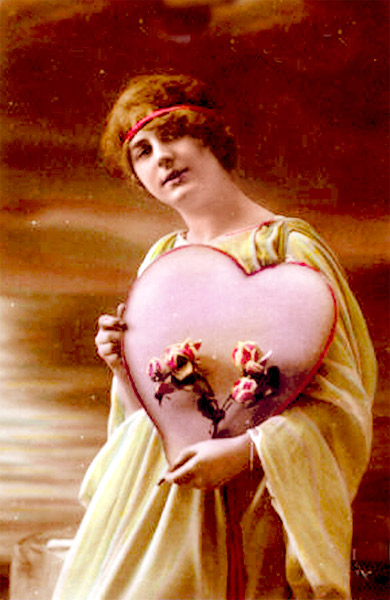
Valentine’s Day has me thinking of hearts, flowers and candy–especially candy.  I was ruined  years ago with Belgian chocolate, not Godiva, but Neuhaus and other brands brought fresh from Brussels, with no preservatives, dark chocolate with real cream fillings so you had to eat them in a week or they would spoil.  Even the shapes were beautiful, shells, hearts, sculptured curves.  Ron would bring them back every time he went to Brussels or flew through the airport.  As my admin assistant at that time said, “It’s hard to go back to Hershey’s when you’ve had this.”

Daddy was always fond of chocolate, but we never had anything like those Belgian chocolates when I was growing up.  If times were good Mother got a Whitman’s sampler on Mother’s Day.  Daddy’s favorites were chocolate-covered cherries.  Mother always got him a box for Christmas, as well as chocolate drops filled with coconut.  Uncle Floyd always gave us a tin of King Leo peppermint sticks for Christmas.   Once Mother went through a fit of baking fancy cakes, and she made a heart-shaped cake for Valentine’s Day.  I think she got the idea from Good Housekeeping magazine.  Valentine’s Day was not a romantic date for my parents by the time I came along.  I think having a fifth child at age 38 (her) and 40 (him) was enough for both of them.

Valentine’s Day was not a big occurance at my house, but it was fraught with anxiety in elementary school.  In the second or third grade each student in my class had a paper bag to be their “Valentine mailbox,” and we were expected to slip valentines in to our friends’ boxes.  Mother was adamant that I give valentines to the whole class.  “Nobody should be left out,” she said.  “It’s mean.”  So I dutifully gave one to everybody.  Most of the class did the same thing, having equally strict mothers.  But there was always some child too poor to buy the boxes of cheap valentines, even the punch-out kind.  I felt embarrassed and ashamed for the kid.  And we each were acutely aware of who in the class got the most valentines–usually some little blond girl.

Our school did not have the elaborate cupcakes, cookies and decorations that became prevalent a generation later.  I just remember those funny candies with the sayings on them like “Be Mine.”

After I grew up, Valentine’s Day became more of a ritual.  The boyfriend took me out for dinner, brought me flowers, maybe candy, maybe some small piece of jewelry.  We drank champagne.  We swept any issues under the carpet and had a romantic evening.

Those days are behind me now.  But I still like the flowers.  Maybe I’ll pick up some the day after Valentine’s Day, when the prices go down!

R.I.P. Don Cornelius–I Miss the ’70s

Photo by Cottonball 09 from Wikimedia
I was saddened this week when Don Cornelius died.  I hadn’t thought about “Soul Train” in a long time, but immediately the theme song and the animated train popped into my head.  “Soul Train” was “American Bandstand”‘s cooler, funky brother, in every sense of the word.

The crazy clothes, the free-form dancing, talk of brotherhood and tolerance–say what you like, there were a lot of good things about it.  And who didn’t love the Jackson Five?  Who can sit still when you hear those silly songs?

I went off to college with a pair of pinwale corduroy elephant bells and a matching print blouse with four-button cuffs and a collar that went halfway down my chest.  I had a baby-blue knit midi-skirt that I wore with my roommate’s white knee boots, which were embroidered with flowers.  Embroidery and ethnic accessories were big.  I embroidered stuff on a chambray shirt for the guy I dated my sophomore year.  He made me a beaded necklace which was too small to go over my head and didn’t have a fastener (oops).

My black friends were heavy into the SuperFly look.  Even some of the white guys were.  Someone who will remain nameless (to protect the guilty) wore green plaid cuffed bellbottoms with gold-and-green leather platform boots and a brown leather jacket.  Believe me, Elton John looked normal back then.  My friend Ed kept his “Sergeant Peppers” suit well into the ’80s–brown tweed, four buttons, epaulets on the shoulders, and flared pants.  He wore it with a brown leather coat.  He was stylin’, for sure.

And the music had a good beat, you could dance to it.  That’s probably why disco refuses to die out as wedding and party music.  You can’t really dance to the Police, as much as I loved them later on.

Enough nostalgia, already–this is not something I normally indulge in.  To paraphrase Woody Allen, life is like a shark.  You have to move forward or you die.  There are a lot of things about the ’70s I don’t regret leaving behind, like discrimination against women being open and legal.  But just one reminder for us all–the Equal Rights Amendment did not pass, and in this advanced 21st century, we still do not have equal pay for equal work.  Boogie down on that.