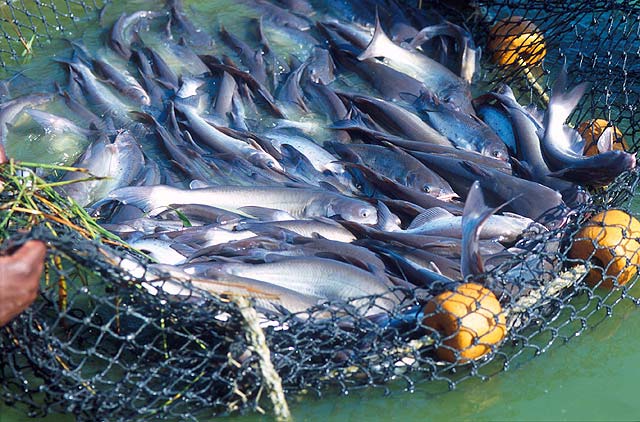
Farmed Catfish, photo by USDAThe fish dinners I grew up with were all fried, sometimes deep-fried filets of bass and sunfish (yum!) and sometimes pan-fried, cornmeal-crusted chunks of catfish, both caught in the Cumberland River by an uncle or a cousin. Mother always had to hide her chagrin when my cousin showed up with a huge river catfish. Yes, it was free meat, but catfish are bottom feeders, so a Cumberland River catfish tasted strongly of diesel fuel.
Nowadays I only get fried catfish when I go back to Tennessee to visit. It’s farm-raised, so the taste is light and fresh. I learned to love fish over the years prepared a lot of different ways. Recently I experimented with some fish filets. The end result was very easy and very good, two of my criteria for cooking. Here’s the result.
Salsa Verde Fish Filets
1 1/2 lbs. halibut, cod, catfish or other white fish filets
1/4 teaspoon salt
2/3 cup salsa verde or tomatillo sauce (i.e., green salsa)
1/2 cup sliced black olives
3-4 tablespoons chopped fresh cilantro leaves
Fresh ground black pepper to taste
Preheat oven to 350 degrees. Spray 13″ x 9″ baking dish with vegetable oil or grease with 2 tablespoons olive oil. Place fish filets in a single layer in the dish. Sprinkle with salt and top with salsa verde.
Bake uncovered 20 -30 minutes or more until fish is done (flakes easily with a fork). Garnish with olives and cilantro.
I grew up with pets, mostly dogs but a few cats. However, none of my animals were allowed to stay in the house, except for brief periods when it was snowing or during a thunderstorm if the dog was frightened. Mother felt strongly that animals in the house were dirty and unsanitary.
I don’t know if this came from her childhood or her mother, Mama, who had a reputation as a strict taskmaster. I do know that Papa, Mother’s father, had well-loved coonhounds–but of course hunting dogs never came in the house. So none of my pets were house pets. When I was in high school, my dog, Dusty, and my cat, Tom, waged a concerted campaign to come in, but to no avail. So Dusty dug a hole under my bedroom window to sleep in, and Tom slept on the windowsill. No doubt they wanted to sleep on my bed.
I never had an indoor cat until I moved to Atlanta. I walked through an ASPCA adoption event at Cumberland Mall to look at the puppies, knowing I wouldn’t take one to live in my apartment. A group of kids were clustered around one cage, holding their hands to the wire mesh. I went over to look. A thin brindled calico cat was rubbing her face against their hands. She went home with me and was my closest friend for 16 years. She slept curled up in the curve of my stomach every night and moved to New York with me, sleeping on the front seat of the car through the whole long drive.
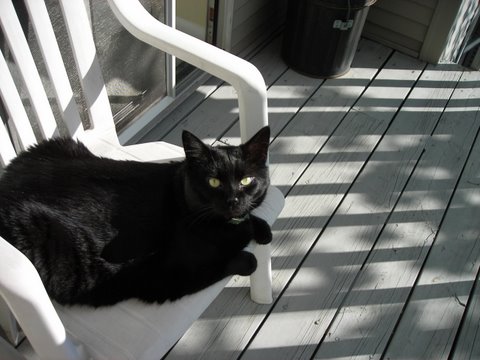
I’ve had other cats since then, calicos, tabbies, black cats. Each one had a different personality, playful, grumpy, affectionate, noisy, bossy. But every one had a distinct point of view and was sure its opinion was as important as mine. That’s why I like cats. They are not eager to please, and they preserve their independence. When a cat loves you, it means something.
All children have a fantasy that they don’t belong to their family of birth. I actually was a Cherokee princess, kidnapped from my tribe, or sometimes the sad orphan of a rich, privileged family that was tragically wiped out by war or disease. Maybe it’s a function of reading The Secret Garden or A Little Princess, or any of myriad children’s books that glamorize the feeling of strangeness or not-belonging so many of us have. Eight Cousins was another, in which the little orphan girl is taken in by a bachelor uncle and discovers she has eight boy cousins, all of whom come to adore her, of course.
My fantasy was compounded by not actually looking much like my sisters and brother. My eyes are a weird light hazel, and my hair had auburn tinges in it. However, if you took my parents’ faces and gave me the top of Mother’s, and Daddy’s from the cheekbones down, you got my face. Apparently my coloring came from my grandfather, and my lack of height from both grandmothers. Amazing how you can mix and match the genetic pieces!
I never thought there was much resemblance among us sisters or cousins until I looked at this photo, years after it was taken at my nephew’s wedding. At first glance, we don’t look alike. We’re tall, short, square, willowy, young, older. My cousin Marvel particularly does not resemble the rest of the family. Then I noticed our legs. We all have calves and ankles that are shaped the same. So it’s from Mother’s side of the family–Bowers legs.
Mother would say they are bad legs, because some of us tend to painful knees and arthritis. But I think that curve of calf to ankle is kind of nice. Now I have to hunt for photos of the younger generations and see if the shape has been passed on. I hope that piece of the genetic code has legs!
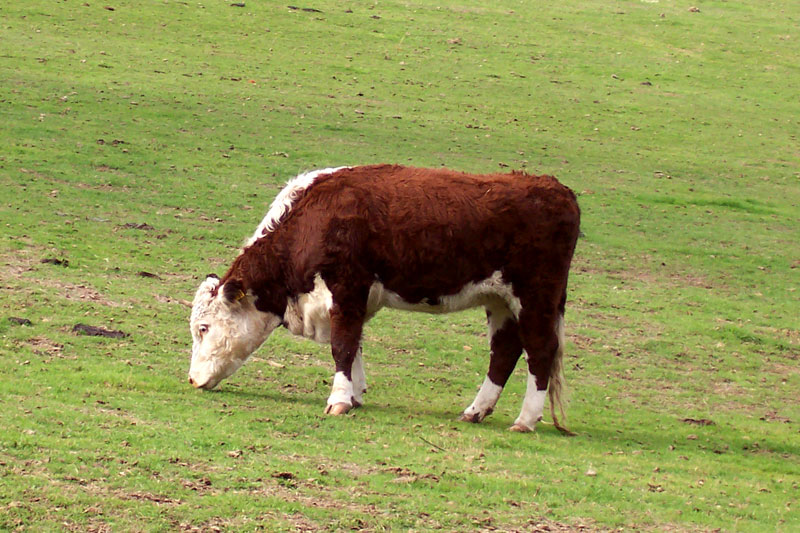
Photo by Fir0002Daddy raised a few beef cows on our small farm in Tennessee, never more than 20 or so. He sold the calves to feed lots when they were several months old, and kept a few to sell as yearlings for beef. The cows were all Herefords, but the bull was an Aberdeen Angus, always a short, black, thick, shiny bull with no horns and a prodigious amount of muscle (i.e., nicely marbled beef).
Daddy named his bull after whomever he bought it from. The first one I remember was Charlie, after Uncle Charlie, Aunt Maud’s husband. Charlie was a beautiful bull and did his job well, producing pretty hybrid calves, but he liked to eat. He got so fat that Daddy was afraid he would fall and break a leg, which would be the end of him, so he sold him.
I was in college when Daddy sold him and bought Little Charlie, also from Uncle Charlie. Little Charlie also was efficient with his herd, but he had a couple of quirks. He insisted that Daddy greet him and pet him whenever he came to the stable to be fed. If Daddy pretended to ignore him, Little Charlie would push Daddy with his head and nearly knock him over until he got attention.
The other quirk involved the way he got up and down from lying in the field. Have you ever seen a cow get up? Normally, a cow lies on its chest and stomach with its legs tucked under. When it rises, the back end comes up first, and the front end follows. Little Charlie got up like a dog–front end first. And sometimes he would pause in transit and sit like a dog for a few minutes as well.
Daddy told me about this on the phone. I refused to believe him. “It’s the truth, baby doll,” he said. “You wait, he’ll do it when you come home next time.”
When I came home, I still thought Daddy was joking, but I took my old Instamatic with me out to the field where the cows were lying on their chests, chewing their cud. Daddy called, “Come here, babies. Come here, Little Charlie.”
Little Charlie raised his front, legs straight. He sat for a few moments contemplating Daddy, then finished rising to his feet and walked over to nudge Daddy with his nose. I snapped pictures as fast as the Instamatic would go.
Somewhere in the boxes and boxes of old photos in my basement there’s a picture of a stocky black bull sitting like a dog in a green field.
I never intended to have a yellow car. I never considered this, or thought of it as something I wanted. The brightest color I ever had was Toyota’s “medium red pearl,” which I felt was pretty racy.
Then I went car shopping in 2007. Due to the occasional snow up here, I was looking for a four-wheel-drive, small SUV that handled well and wasn’t too expensive. So I test-drove some Jeep models, which handled like golf carts on a rainy course. The Toyota was too expensive for me, and the Pontiac seemed cheap and clunky. Suburus were nerdy and didn’t hold the road well.
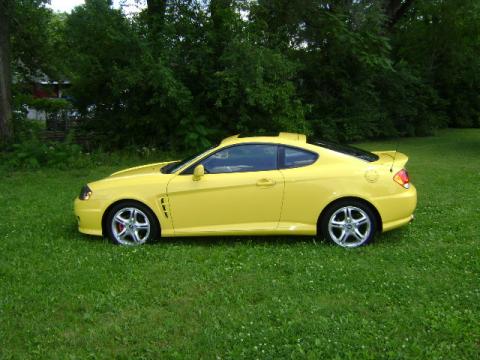
I went to a Hyundai dealership after work, on a whim, to look at the Santa Fe. The salesmen were busy, so I walked around the Santa Fe models–bigger than I expected–and mused about whether this was really me. A flash of yellow caught my eye. There on the showroom floor was a yellow 2006 Hyundai Tiburon. Tiny, cheeky, with Michelin tires and a six-cylinder engine, it was a toy sports car. And it was marked way down.
What could it hurt to test drive it? Ha. I was a goner. I drove a hard bargain and took it home that night, kissing goodbye my dear old Toyota.
Since then I’ve learned that having a yellow car makes you vulnerable to shameless remarks–“is that a taxi?”–and makes it impossible to fade into the crowd. The dry cleaner guy knows my car. The neighborhood kids know my car. When I first got it, my colleagues wanted to drive it around the corporate parking lot.
It’s not fun to drive in snow, and it has to be dug out when there is more than two inches on the ground. I dented it on a rock in a driveway in the Adirondacks, and I’ve scraped it innumerable times on concrete bumpers and sidewalks. The gas mileage is not that great with such a big engine in a small body. And I can’t be anonymous when I’m driving it.
But, you know what? It’s fun. It makes me smile. Having a Hyundai as my middle-age-crazy car is a little embarrassing. But if that’s the worst thing I do, it’s not so bad.
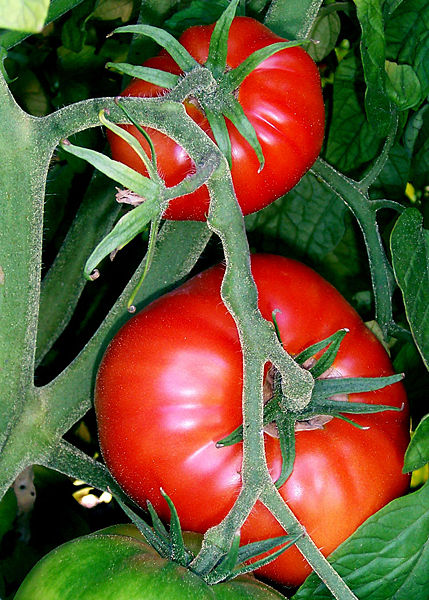
I have an ambivalent relationship with vegetable gardening due to my youth on a Tennesee farm. The upside of a vegetable garden is obvious. We had homegrown tomatoes from about July 4 through the rest of the summer, juicy, sweet and picked when they were ripe, not shipped in from Florida or Mexico. If you wanted green beans for dinner, you went out and picked some. Silver Queen sweet corn was so flavorful it really didn’t need butter. Cucumbers, cantaloupe–Mother cut it up in slices and kept a gallon jar full in the refrigerator–“shelly” beans, all were grown every year. There’s not much better than a thick slice of ripe, homegrown Big Boy tomato on a hot biscuit with butter.
The downside for me was two issues: hard, manual labor, and bugs. A large garden has to be hoed to get rid of the weeds, if you want to have any significant amout of produce. And gardens are not like grocery stores. You cannot shop when you need something. When the garden “comes in,” you have to pick, eat, freeze, can and/or share. One memorable summer the Kentucky Wonder pole beans would not stop bearing, I suppose due to optimal rain and sun. Mother and I canned or froze a total of 100 quarts of beans. I walked between the rows muttering, “Die, bastards, die.” We even canned two bushels for Aunt Eunice in exchange for her making a slipcover for the couch. And Kentucky Wonders are string beans, so you have to string them as well as break them before canning or freezing. I resented the extra work.
Our garden was not organic by any stretch, since Daddy put a little fertilizer in the soil before we planted (not much, or you got all leaves and no fruit, so to speak). We also used a pesticide on the young plants, but once they started bearing we couldn’t safely do that. So bugs became a presence by the time we were ready to harvest from the garden.
The worms that get in ears of corn weirded me out, but they at least were not belligerent. My real battles were with the blister bugs, or blister beetles, to give them their proper name. The ones in our garden lived on the tomato plants. They were one to two inches long with vertical black and white stripes. If I approached a plant with a blister bug on it, the bug would do a sort of push-up and elevate its rear legs, the better to spray my hand with acid. The acid raised blisters on anything it touched. I learned to carry a stick with me so I could knock off any blister bugs that threatened, although I had to be careful not to knock them onto another plant where I planned to pick.
So I don’t have fond memories of gardening back in Tennessee. Every once in a while the impulse to grow something still rises. I used to grow tomatoes on my balcony, which my boyfriend called “the back forty,” but quit when I realized they were the most expensive tomatoes I’d ever had, and not very good to boot. The kind you can grow in pots are not very flavorful. I have the occasional pot of herbs along with the flower boxes, just to prove I still have it. I could have a truck patch if I had to, but please don’t make me do it!
I never knew my grandmother on my mother’s side; she died before I was born. Mother’s stories about her made her sound like the taskmaster and moral guardian of the family, while Papa, Mother’s father, was fun-loving and mischievous. Both Mama and Papa worked hard on their small farm all their lives, raising five children. Mother used to say I had Mama’s hands, long-fingered and slim, while she had Papa’s bony, large-knuckled ones.
Mother learned to cook from Mama, as well as how to can and preserve vegetables and fruits, make jams and jellies, and generally make the most of what they were able to grow in their garden patch. Most of the recipes were in her head, and Mother did not write them down. When I was in high school I asked her for Mama’s tea cake recipe. They are simple, thin cookies, that are in fact good with a cup of tea. I struggled with these, because it helps to know how to handle biscuit dough without over-working it in order to make these cookies!
Mama’s Tea Cakes
2 1/4 cups sugar
about 2 cups flour
1 tsp. baking soda
pinch salt
2 eggs
2/3 cup buttermilk
1 tsp. vanilla
1 cup butter (or margarine, butter is better)
Preheat oven to 350 degrees. Mix the dry ingredients and put them on the biscuit board or pastry sheet where you will roll out the cakes. Make a well in the center of the dry ingredients, and pour the wet ingredients there. Mix together until you have dough–don’t handle too much! Roll out thin and cut into round cookies (biscuit cutter or a glass works fine). Bake until lightly browned.
Optional: Add lemon zest or orange zest. Not authentic to the recipe or period, but a nice flavor.
Titan II ICBMIn the early 1960’s, my father drove ICBMs into underground tunnels for a living. My mother knew what he did, but no one else knew, except the people he worked with in the arsenal hidden inside a hill.
Every day during the week he would leave for work early in the morning, dressed in
khaki work clothes and wearing his Top Secret Clearance badge with an atomic symbol and the letters “AEC” on it. Mother packed his lunch in a brown paper bag. He worked very regular hours most of the time, like someone working a shift at a factory. If asked, my sisters and I said, “My daddy works for the government.” That was all we knew at the time.
Daddy was a silent man, dark and rugged, with rather forbidding eyebrows and a stern
grey-eyed gaze. There are black and white photos of Daddy and his best friend
Grissom, dressed in coveralls, posed by one of the flatbed trucks that hauled
the missiles. Grissom was square-jawed and has a buzz cut. They looked straight
at the camera, serious and dependable, the kind of men who could handle a nuclear warhead and not get rattled.
Occasionally, Daddy would be “on call.” On those nights, he would bring home a pistol in a black leather holster and put it on top of the chest of drawers in my parents’ bedroom. We were forbidden to enter the room.
“Don’t go near that chest of drawers,” he would say. “That thing could kill you.”
Then a black sedan would come for him at 2 or 3 o’clock in the morning. He would put on the holster and leave. And shortly after that a freight train would roar past on the tracks in back of our house.
Periodically Daddy was sent to Los Alamos for training. He hated the desert. Whenever he went to New Mexico Daddy came back with stories of the bone-dry horrors he had seen. “There was a tarantula spider as big as a hat walking along the side of the road,” he
said. “There’s a cave that the bats fly out of at dark, and they look like a thundercloud coming out, there’s so many of them.”
In 1962 Daddy was called out at night more often, carrying the pistol. Mother looked worried. One day Daddy brought home a brochure from work, with a Department of Defense logo on the back. Its title was, “Building a Home Bomb Shelter.”
The booklet had lots of practical suggestions. Food, water, how to dig a latrine in your shelter if the sewage system stopped working—survival skills, A to Z. I was troubled, however, by the booklet’s attitude toward pets. They were expendable. Only people
were important enough to save from nuclear destruction.
I had a recurring dream about my dog, Whitey. I dreamed that the bombs had dropped,
and my family was in the bomb shelter Daddy built in our garage. It was late evening all the time, day and night were gone forever. The sun never rose or set. The sky was the greenish color it gets right before a terrible thunderstorm or a tornado, and it never changed.
I was worried sick about Whitey. When the sirens went off, I had gone looking for him, calling and calling. But he didn’t come. Finally I ran home to the shelter, racing
anxiously to safety.
I peered out the narrow glass windows in the garage door, watching for him. After days of watching, I looked without hope—and he appeared in the back yard.
But he was strange. He moved with an odd, sideways walk. He glowed pale green, fluorescent. But he had come home. I ran to the door to let him in.
“No, honey, you can’t,” Daddy said. “He would poison us all.”
“He can’t help it!” I cried. “We can’t let him die, he’ll starve!”
“He’s going to die anyway,” Daddy said.
And the dog began to cry, a long, low moaning. It went on and on, for days, until he was just a skeleton, still crying outside the door. I woke up with a racing heart.
My daddy was a man who considered there was a right way to do anything, whether it was repairing a car engine or eating cornflakes. He was not dictatorial or oppressive in any way. Daddy just knew what he considered right, and he demonstrated how to do things, expecting you to follow his example.
When my nephew Jarrett was quite small, my sister Juanita and her family stayed on the farm with my parents for several weeks while they were in the process of moving to Kentucky. Jarrett and his brother Mason followed Daddy around and absorbed his every utterance, but Jarrett was particularly impressionable.
Years later I met him and his fiancee for lunch in Manhattan and listened to Jarrett explain to her the proper way to eat cornflakes. “Granddaddy showed me, ” he said. “You pour the flakes in a bowl, then you crush them with your hands, like this”–he demonstrated. ‘Then you put sugar on top, and finally you pour the milk on.” He then moved on to the proper methodology for having molasses and biscuits. “You have to put the butter on the plate, then pour the sorghum molasses on it. You whip it up with your knife. Then you split your biscuit, and spread it on the biscuit.”
Daddy’s lessons weren’t always absorbed. He tried to teach my brother to work on a car engine, but Gil preferred to bounce a tennis ball off the side of the house. He never managed to teach Mother to drive, because she would get nervous, he would get gruff, she would dissolve in tears, and the lesson ended. Consequently she was dependent on other people for transportation her entire life.
But some of the lessons did sink in. He taught me to change a tire after I had two flats in one week. I had to jump on the crowbar to loosen the lug nuts, but I could do it. It stood me in good stead for many years.
Daddy died of a heart attack when I was 22 years old. I miss him to this day. Happy Father’s Day to dads everywhere. Your daughters love you.
I’m the youngest of five children, and there are almost 20 years between my oldest sister and me. Daddy turned 40 years old not long after I was born. That’s not unusual today, but in my parents’ day they were considered old enough to be grandparents! There are seven years between the next-to-youngest and me, so I’m sure Mother and Daddy thought their family was done long before I came along.
You’d think they would not have been pleased, but from all accounts they were thrilled. Even when I was a teenager, Daddy still spent time with me and did things with me, difficult as that was for him with a girl who wasn’t athletic, and at a time when we didn’t have money to spare for movies or dinners out.
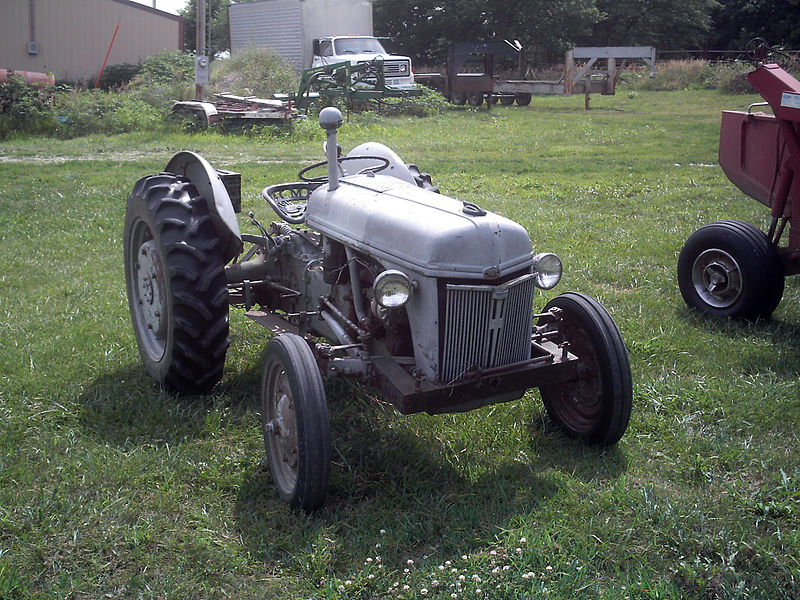
One inspiration he had falls squarely into the “don’t try this at home” category. It rarely snowed more than a dusting in our part of Tennessee–ice storms were more prevalent. So any snow was a huge treat and a special occasion. One winter we got a few inches of snow, and school was closed. I had a sled, but the runners kept getting bogged down in the wet snow. Then Daddy had his big idea. He took a discarded car hood from my uncle’s garage, and chained it upside-down to the back of his tractor. “Get on the hood, baby doll, and hold on!” he said.
We spent a good part of the afternoon going up and down the slushy, ice-slick road with the tractor and car hood. Looking back on it now, I wonder why the hood didn’t slide into the tractor’s rear wheels, and how on earth I kept from falling off. But I had no problems at the time, and it was exhilirating to ride and slide in the cold.
Finally we went home, and Daddy unchained the hood. My boy cousins next door had been watching enviously. “Uncle George, could we use that car hood?” Dale asked. Daddy said they could. Dale and Don launched themselves down a hill, completely unable to steer the hood. They hit a tree and Don broke his arm. Oops! Like I said, don’t try this at home!





 writinghersense