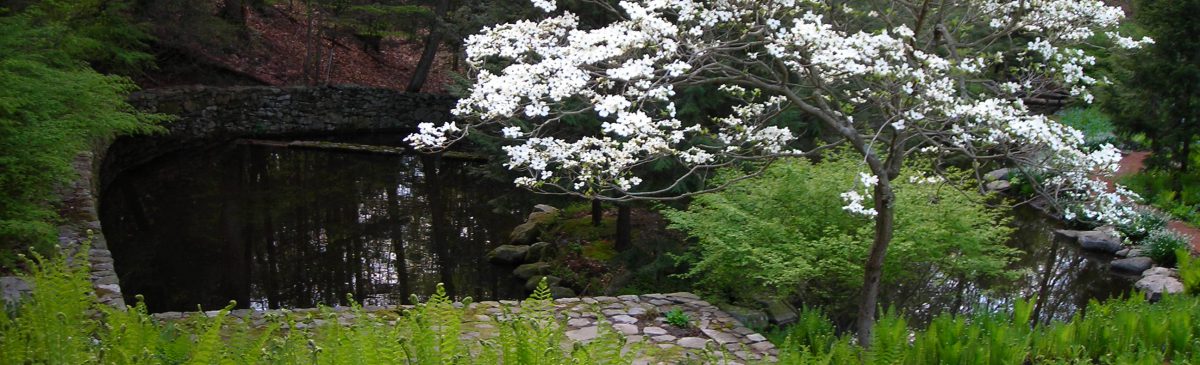
The Autumnal Equinox

I’m always amazed how quickly things change when the official first day of fall arrives.  The equinox (the date when day and night are of equal length) only happens twice a year, spring and fall.  Here in the northern hemisphere, the spring equinox signals we’re DSCN0162heading toward the long days of summer, culminating in Midsummer, or the summer solstice.  The fall equinox means  the shorter days and longer nights are accelerating toward winter, peaking at the winter solstice, or the shortest day.  Then the days slowly get longer again.  The cycle is as old as the earth itself, I suppose.
Here’s a cool infographic that explains why this happens:  http://www.livescience.com/31264-season-season-earth-equinoxes-solstices-infographic.html

Fall is a melancholy time of year, but to me it’s the most beautiful.  I love it that summer goes away in a burst of bright colors before the bleakness of winter.  The leaves haven’t started changing yet where I live, but the weather is slowly cooling, and it’s harder to get up before 7 a.m. when the sun rises.

As a child I remember looking forward to Halloween and Thanksgiving.  I didn’t look forward so much to standing out in the dark, waiting for the school bus in the morning!  I remember seeing the sun come up from a school bus window as the bus wound its way through the hills of the countryside, mist rising from the hollows.

And here in Sleepy Hollow Country, Halloween has turned into a big celebration!  I’m still stunned to see busloads of tourists coming down Route 9.

Let’s enjoy the brilliance of fall.  Winter comes soon enough.

The View Out My Window, or Watching Bridge Construction

Photo credit:  Monica Miller, WCBS 880
Photo credit: Monica Miller, WCBS 880

One of the main reasons I bought my condo was its view of the Hudson River and the Tappan Zee Bridge.  I’ve watched the river traffic for years now.  Summer evenings mean sailboats gliding from one side to the other.  Winter mornings feature the Coast Guard cutter going upriver to look for ice, and on one memorable occasion an ice-cutting ship.

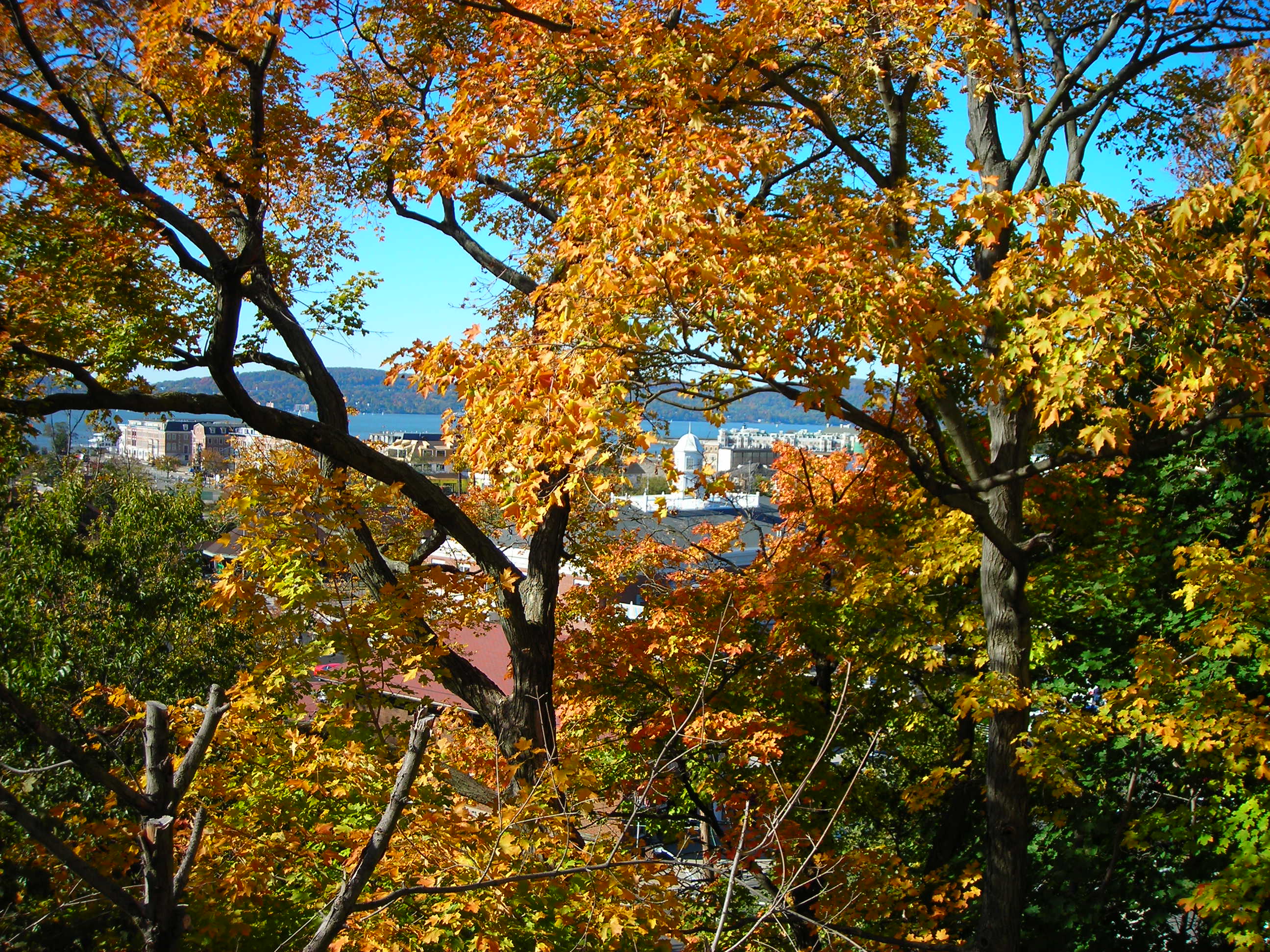
In the fall the view is framed by orange and yellow maple trees.  In the spring it’s a vista of green buds which eventually open up to block part of the view.  Construction of the new luxury townhouses and condos by the riverbank has taken off the bottom of the view.  Last October I watched Superstorm Sandy drive the Hudson over its banks as the water swelled up.

Now my view is changing again, due to construction of the new Tappan Zee Bridge.  Barges, tugboats and dredges are moving into position.  I understand one of the largest cranes in the world is on its way through the Panama Canal to help with the construction.

This will go on for five years, I’m told.  I’m not sure how crowded the river will be before they are done.  There has already been a terrible accident when a powerboat hit one of the construction barges at night.  Since then the barges are lighted more prominently, and I think I heard that river patrols have been stepped up.

I hope the sailboats and pleasure boats will still be able to cruise above and below the construction.  So far the noise has not been bad on my side.  There will be a certain fascination in seeing this massive structure rise and the old bridge be taken down.  But I already miss the days when sailboats and the occasional barge were the only vessels disturbing the peace of that grey water.

9/11, Twelve Years Later

120px-Wtc-2004-memorial[1]I was grateful today that it wasn’t one of those blue-sky September days, but muggy and cloudy.  Every September when the sky is that clear, unclouded blue I remember how lovely it was on 9/11 in 2001, and how that day fell apart into terror and dread.

It’s amazing to me how New York City has come back and how people have carried on with their lives.  New Yorkers (and New Jerseyites, for many of them were killed that day) are tough. 

The reading of the names still makes me cry, and the footage of the attacks is still horrifying.  But every day people commute to the city to work, and millions of others live there.  The Freedom Tower looms over lower Manhattan.  Downtown businesses came back.  Children have been born who will have no personal memory of what happened.  Tourists come and go in their hordes.  At least now they have a memorial to look at instead of a gaping hole.

“Never forget” is the motto you see at many fire stations and police stations, throughout the tri-state area, where first responders poured into the city to help the New York City forces.  But I wonder, will the day come when the pain is not remembered?  At least, will the day come when a blue September sky doesn’t make us uneasy?


Happy New School Year

Photo from Flickr
Photo from Flickr

The start of the school year always feels like the beginning of a new year to me, even though it’s been many years since I boarded that school bus or headed off to college.  September is a time of reflection and remembering as autumn moves in and summer dissolves like the early morning mists.  But there’s still the hope that it’s not too late to plot a new course, try something new, find a better way to go forward.

As a small child in the South, the weather was still punishingly hot when we started school in August, and schools were not air-conditioned.  My main concern then was school clothes.  Girls were not allowed to wear pants (can you imagine?) so we wore “dark cotton” dresses, usually plaids in fall colors but made of cotton so we weren’t too hot.  School supplies involved having the correct pencils, tablets and crayons so you could carry out your assigned tasks.   No computers, book bags or backpacks!

Elementary school was both a delight and a punishment to me.  I never fit in from the very beginning because I had learned to read, write and do basic math at home, so I arrived in first grade ready for second grade.  My mother was adamant that the school should not make me skip a grade because I was small, shy and among the youngest in the class.  So for the first three years of elementary school I sat in the back of the class and did my own work for the next grade, only joining the rest for art, music, phys ed and math.  I never really felt like part of the group, even in later years when I was “tracked in” and joined the rest of the class.

But I learned. I made friends, I got along, I kept working to learn new things and do better.  I wanted to make my parents proud, and I wanted a college scholarship.  All those things came true, and I am grateful.  This was the foundation of the life I’ve had since then.

At this point in my life back-to-school just marks the end of summer.  But it still feels like a time of possibilities and new plans.  Here’s to the new year:  It’s never too late to learn and grow.  My wish for us all is health, prosperity and curiosity!


Summer Tomato Salad

429px-Tomatoes-on-the-bush[1]Now that summer is winding down, tomatoes are at their best.  I am grateful to my friend who has shared her homegrown tomatoes with me!  Here is a recipe for tomato salad, with a couple of variations, to take advantage of them at their juiciest and ripest.

The salad will have the best flavor if you use a mix of different kinds–heirloom tomatoes preferred, and include yellow ones, striped ones, and cherry or grape tomatoes.  This recipe was inspired by Jamie Oliver’s “Mothership Tomato Salad,” but I changed it a bit.  His calls for dried oregano, which I’m not crazy about, and a fresh red chile.  I use fresh basil instead, and no chile.  Feel free to experiment!  The cucumber is optional.  I’ve made it with and without; both versions have their virtues.

Enjoy the end of summer…..

Summer Tomato Salad

2 1/4 lbs. mixed ripe tomatoes, different shapes and colors, or less than 2 lbs. tomatoes and 1 cucumber

Sea salt and freshly ground black pepper

Several leaves of fresh basil, to taste

Red wine or balsamic vinegar

Extra-virgin olive oil

1 clove garlic, peeled and grated (or use the minced in oil kind, which comes bottled)

Slice up the tomatoes, some in chunks, some in quarters, and some in half if they are small like cherry tomatoes.  Put them in a colander and season with a good pinch of sea salt.  Give them a toss, season again with sea salt, and toss again.  The salt won’t be drawn into the tomatoes, so don’t worry that the salad will be too salty!

Let the tomatoes sit in the colander for 15 minutes and throw away any juice that drains out.  Transfer the tomatoes to a large bowl.  If you’re adding a cucumber, cut it in thin slices or small chunks and toss in with the tomatoes.  Cut up the basil into strips (kitchen scissors are good for this) and add to the bowl.  Toss all this a bit.

Make a vinaigrette of 1 part vinegar to 2 parts oil and the garlic.  Add the dressing and toss lightly to coat the salad.  Add fresh ground black pepper to taste.

This would be terrific with some mozzarella or some rustic bread.


Summer Vacations

Some of my friends have jetted off to exotic places, and others are staying home and picnicking at outdoor concerts, going to dance performances and generally enjoying  summer stay-cations.  I have been remembering vacations in my childhood.  We couldn’t afford to fly anywhere, much less to stay in a motel (remember motels?), so our vacations were either day trips or long drives to visit more distant relatives.

One trip we made many times was from our home in Tennessee through Kentucky to Ohio, to visit my oldest sister and her young family.  This was in the early days of the interstate highway system, and Kentucky was pretty low on the priority list for completion.  I think we went KY 68 much of the way, and finally got to the Bluegrass Parkway, a toll road.

The route was mostly two-lane blacktop highways with the occasional passing lane.  The roads wound around the hills and hollows, passing through towns like Horse Cave and near Mammoth Cave National Park.  I was in the back seat, trying not to get carsick as our un-airconditioned car swerved around the curves.  Daddy liked to drive fast, and Mother was constantly front-seat-driving from the passenger side.  “George!  You’re making me nervous!” was her frequent cry.

From www.stuckeys.com
From http://www.stuckeys.com

My favorite part of the trip was stopping at Stuckey’s.  Any Southern or Midwestern road warriors will remember them.  Often they were the only place to get snacks and gasoline on these highways winding from one one-horse town to another.  Their claim to fame was the famous Pecan Log Roll.  Stuckey’s also sold the driest, nastiest pralines on the face of the earth, but we thought they were great since we’d never had the real thing.

It was a tremendous treat to stop there, look at all the tourist junk, and maybe get a candy bar or a piece of pecan divinity.  I coveted the small figurines of horses made of ceramic or plastic–I was into collecting horses and reading horse stories at that time.  They also sold novelty goods like cups that spilled on you, and I think I remember comic books.

We’d get Cokes to go with Mother’s box lunches (another big treat, since Cokes were forbidden at home), park in the shade, and gas up and hit the restrooms before getting back on the road again.  A road trip, indeed!

Kitten Therapy

Young_cats[1]One of my neighbors is fostering some tiny kittens whose feral mother seems to have disappeared.  Her (adult) daughter found them and brought them home, and is supposed to be responsible for feeding them and taking care of them.  I think her daughter is doing most of the heavy lifting, but my neighbor is filling in quite a bit.  She texted me a few days ago, “Want to help me kitten-sit?”

I went over to hang out, pet them and help socialize them.  There was an article in the New York Times science section several years ago which explained the types of cat personalities and said studies had shown cats are more socialized toward humans if you handle them when they are small kittens, less than 8 weeks old.  So playing with and petting kittens is actually good pet parenting.  It’s a great excuse, anyway!

Spending an hour with them reminded me how much fun they are–and how much work!  I’ve always adopted adult cats because they have a harder time getting adopted, and because they already have their personalities and habits.

These three little kittens were tiny furballs in perpetual motion, then they would just conk out.  The largest was a grey male with white paws, whose fur stuck out in all directions.  The middle one was a pretty female, sort of tabby.  The runt of the litter was a tiny female with muddy markings and a white stomach but a loud squeak of a meow and a purr bigger than anything a creature that small should be able to produce.  She discovered she could climb up the front of the couch before I rescued her from an end table.

Kittens are like wild children, running until they are exhausted–wild children with claws, who can climb curtains and shred chairs!  I was tempted by the runt, but I’m afraid my aggressive cat would not react well to a small, furry irritant.

Playing with them and petting them was good for them, but it was great for me.  It’s impossible to think of anything unpleasant when a little fur lump has its head tucked under your chin, purring.  I’ll come play again before they find homes, I hope.

Into the Dark

daddy-and-mother[1]Any of us whose parents live to be elderly are likely to experience their long, sad decline at the end of life.  I’ve had both extremes–Daddy died suddenly at a relatively young age, of a heart attack, while Mother spent a couple of decades with heart failure and then strokes.  Even when you’ve had lots of time to prepare it always comes as a shock.  How can they be gone?  How will my life go on?

Scott Simon, an NPR host and former Today show weekend host, went through this with his mother in Chicago.  He tweeted throughout her time in the ICU, until she died, and after, an online journal of his thoughts and feelings in 180 characters per message.  If you haven’t read them, here is a link:  https://twitter.com/nprscottsimon

I’m a bit disturbed by the concept of typing on a smartphone while your mother is dying, but his writing and emotions disarm that.  He held her in his arms, sang to her, listened to her while she could still talk.

When I worked for a hospice agency I was told the most important things to say when you’re saying goodbye are:  I love you, please forgive me, I forgive you, thank you.  Sometimes a parent needs to hear you say, “It’s okay for you to go, I will be all right.”  Mothers are still mothers, even on their deathbeds.  One nurse told me that sometimes the mother will wait to die until the children are out of her room.  “I think some of them want to spare the children, right to the end, ” she said.

It’s important to know when to let go, and to get the help you and your parent need.  Facing the end is terrible, but anyone who has mourned a dying person knows the truth:  we’re not mourning for them, we’re mourning for us and our loss.

Generations of Irises

Iris from Mother's bulbsMy mother was always fond of flowers.  Wherever we lived, she planted bulbs and weeded flower beds.  Our yard was never elaborate or manicured, and she certainly never read gardening books or drew plans.  But I remember four o’clocks which bloomed in the evening shade, and beds of zinnias and marigolds scorching in the summer sun.  She planted tiger lilies on the edges of the back yard at the house we lived in when I was in elementary school and phlox clinging to a rocky outcropping by the kitchen door.

When we moved to the farm someone gave Mother several varieties of irises.  Some of them were the classic purple ones which are the state flower of Tennessee.  Others had huge blossoms in unusual colors, including peach.  They were the last of the bulbs to bloom each spring (technically speaking, they grew from rhizomes) and gave us a week or two of glory before the heat set in.  In order to keep them blooming year after year, the rhizomes have to be thinned out.  Mother gave some to my sister Sherrie, who planted them in her yard.  As recently as three years ago they were still blossoming.

I’m not sure how some of Sherrie’s rhizomes got to my niece Judy in Ohio, but they did.  The photo is of a peach-colored iris blooming in Judy’s yard this spring.  She has two plants that still come up and flower, descendants of the original stock that was planted in the late ’60s on our farm.  Out of those roots….maybe they will last long enough to provide rhizomes for another generation, another yard, more springs.

Heat Wave

A modern-day air conditioning unit in Vicksburg, MS

My friend Ed observed the other day that the two forces which made the modern South possible are integration and air conditioning.  The more I think about that statement, the truer it becomes.  We obviously still have huge issues with racial tensions throughout this country–the sad case of Trayvon Martin makes that only too clear.  Yet, as my African-American friend has told me before, things are a whole lot better than they were 50 years ago.  I hope we can get still further down that road.

On the subject of air conditioning, the heat and humidity of this summer has led me to remember what it was like in the summer in Tennessee.  When I was a small child we only had a big unit air conditioner in the dining room window, which was supposed to cool the entire house.  It was not nearly big enough, so we had circulating fans on the floor in our bedrooms.  The rhythmic hum of the fan was as good as white noise to help me fall asleep, while the movement of air washing over me made me feel cooler.

On the worst nights, when the air conditioner just couldn’t cool enough and the air was thick with humidity, Daddy would get out the car and we would go for a ride after dark with the windows rolled down.  The sticky air didn’t help much but the breeze coming through the windows was better.

We spent one summer in an old, dilapidated house without enough wiring for air conditioners while the house on the farm was being built.  It had thick walls which did keep it from heating up as much as it would have otherwise.  But many a night I laid in bed, sheets thrown off, sweating even with a fan pointed at me from the floor.

Air conditioning in modern office buildings made it possible for industry to move to the South, which made city life and civilization preferable to farming for many people, and brought diverse populations to the area.  Air conditioning in homes made it much more comfortable to live there.  It was a big change which I am grateful for, even here in New York–the third heat wave of the summer began yesterday!